Neurology-Led Care in Gangdong-gu, Seoul · 1:1 Specialist Consultation
en-US

Epilepsy
Epilepsy evaluation in Seoul at Seoulhoho Hospital: seizure-type diagnosis, EEG interpreted directly by a neurologist, medication selection and regular follow-up.
Epilepsy
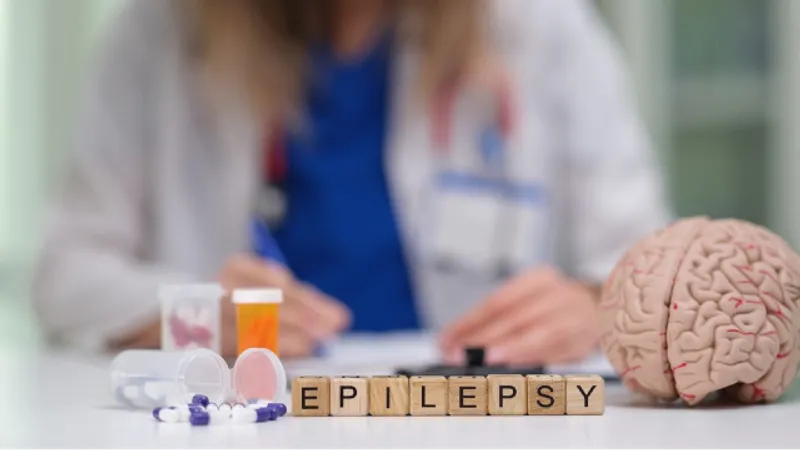
Medically reviewed by Dr.Ho-Sang Yoon, MD, Board-certified Neurologist
Epilepsy evaluation in Seoul at Seoulhoho Hospital starts from the position that a seizure is a finding, not yet a diagnosis. Epilepsy is a disorder in which abnormal electrical activity occurs in the brain's nerve cells, causing recurrent seizures, and the clinic's stated requirement is that diagnosis and medication selection be performed by a neurologist or epilepsy specialist. The clinic sits in Gangdong-gu, Seoul, and epilepsy is one of the treating neurologist's two subspecialty focuses.
What Is Epilepsy?
Epilepsy is a condition of recurrent seizures caused by abnormal electrical activity in the brain's nerve cells. The seizures it produces are not all the same, and the type matters for both diagnosis and treatment.
Seizures may be generalised, with convulsions, or partial, involving loss of consciousness.
Accurate testing to determine the underlying cause is necessary, because the causes of epilepsy vary with age.
Diagnosis and medication selection should be performed by a neurologist or epilepsy specialist.
Appropriate medication can control seizures in many patients.
Surgical treatment may be considered where medication proves ineffective.
Not every seizure-like episode is epilepsy. Some are caused by another condition entirely, which means a different diagnosis and a different treatment — and one of the practical functions of a specialist evaluation is to rule that in or out before a long-term anti-seizure medication is started. NINDS's account of seizures and epilepsy describes the same division between seizure types, and it is the reason electroencephalography features so early in the assessment.
Who Performs Epilepsy Evaluation at Seoulhoho Hospital
Dr. Ho-Sang Yoon, M.D.
Representative Director and Chief Neurologist
Dr. Ho-Sang Yoon, Representative Director and Chief Neurologist, sees and assesses each patient personally. Epilepsy is one of his four listed core specialisations, and the clinic describes epilepsy together with sleep disorders as its subspecialty focus — a combination it notes is uncommon locally.
He is a board-certified neurologist, a graduate of Dongguk University College of Medicine who completed neurology specialist training at Dongguk University Hospital, and a former clinical professor at the Seoul National University Bundang Hospital Sleep/Epilepsy Center and at Dongguk University Ilsan Hospital. He is certified as an EEG quality-control physician, and his subspecialty technique expertise is documented as including epilepsy and EEG specifically. He is a full member of the Korean Neurological Association, the Korean Society of Clinical Neurophysiology, the Korean Society of Neuromuscular Disorders, the Korean Association of Electromyography and Electrodiagnostic Medicine, the Korean Society of Encephalitis/Neuroinflammation, the Korean Headache Society, and the Korean Stroke Society.
One consequence is worth stating plainly, because it is the part patients cannot verify for themselves: the clinic states that EEG is interpreted directly by a neurologist rather than passed to an outside reader. In epilepsy, where the interpretation of an equivocal trace changes the diagnosis and therefore the medication, that is not an administrative detail. It also means the clinician who chose the test, the clinician who read it, and the clinician who will prescribe against it are the same person, so nothing is lost in the handover between those three steps.
What Epilepsy Assessment Involves
| Step | What it establishes |
|---|---|
| Seizure and medical history | What the episodes look like, how often, and what preceded them |
| Neurological evaluation | Whether there are signs pointing to an underlying cause |
| Appropriate testing, including EEG | The cause and type of the seizures |
| Specialist diagnosis | Whether this is epilepsy, and which kind |
| Medication selection | The anti-seizure treatment matched to the seizure type |
| Regular management and counselling | Whether control is being achieved, and how well the medication is tolerated |
Who Is a Good Candidate for Epilepsy Evaluation?
People experiencing recurrent seizures.
People with symptoms suggestive of epilepsy that have not been formally assessed.
Patients who want the underlying cause of recurrent seizures determined.
Patients already on anti-seizure medication who want the diagnosis and the drug choice reviewed.
Patients with seizure-like episodes where another condition needs excluding.
Patients who want previous EEG or imaging reports reviewed by a neurologist.
Patients whose seizures are not controlled on their current medication and want the plan reassessed.
There is no general group that should simply postpone an epilepsy evaluation: anyone experiencing recurrent or unexplained seizures should be assessed by a qualified neurologist. What varies is what the assessment concludes. People with certain medical conditions, or with seizure-like episodes caused by something else, may not have epilepsy at all and need a different diagnosis and treatment. Treatment also has to be individualised for people with medication allergies, significant drug interactions, or other conditions that constrain the choice of drug.
What to Expect: Procedure, Recovery, and Results Timeline
The pathway is an evaluation followed by long-term management rather than a procedure with an end date.
Neurological evaluation and appropriate testing to identify the cause and type of the seizures.
Specialist diagnosis based on those findings.
Selection of treatment, usually appropriate medication with regular management.
Regular follow-up to monitor seizure control.
Counselling alongside the medical management.
Consideration of surgery where medication proves ineffective.
Preparation depends on what is planned, but the history is the part only the patient can supply: provide the complete seizure and medical history, and follow the neurologist's instructions on medication and testing. If someone witnessed the episodes, what they saw is often more diagnostically useful than what the patient remembers.
| Stage | Timing |
|---|---|
| Evaluation and testing | Varies with required tests, seizure type, and suspected cause |
| Diagnosis | After testing and specialist review |
| Treatment response | Varies by type, cause, and individual response |
| Follow-up | Regular, and ongoing |
| Final outcome | No fixed point; long-term control is assessed through continuing follow-up |
Epilepsy is generally managed as a long-term condition rather than having a fixed recovery period. Duration and the number of visits vary with the type and severity of the epilepsy, the testing required, the treatment response, and whether surgical treatment becomes relevant. Seizure control may improve with appropriate treatment, but ongoing medication, monitoring, and follow-up may be required to maintain it, and there is no point at which a final result is declared on a timetable.
For travelling patients, the required stay varies with the diagnostic tests, the treatment plan, seizure control, and whether surgery is required. The right time to fly depends on seizure control, recent seizure activity, the treatment received, and the treating doctor's assessment — patients should confirm that air travel is medically appropriate before flying home. Aftercare is continuity: consistent treatment, regular management, counselling, and continued follow-up with a neurologist or epilepsy specialist, which for an international patient means agreeing who provides that follow-up after the trip.
Two features of the timeline are worth separating, because patients often expect them to move together. The first is the diagnosis, which can be reached relatively quickly once the history is complete and the testing is done. The second is control, which is judged over months rather than at a visit, because the question is not whether a medication was tolerated on the day but whether the seizure frequency changed across a meaningful stretch of time. That is why the clinic describes regular management and counselling as part of the treatment rather than as an optional extra: the drug choice is a hypothesis, and follow-up is what tests it. U.S. patients most often request this evaluation for exactly that reason — for a neurological assessment, an accurate diagnosis, medication management, and specialist review of a treatment plan that has not settled.
Combining Epilepsy Care with Other Services
EEG. Interpreted directly by a neurologist at this clinic, and central to the diagnosis rather than an add-on.
Sleep assessment. Sleep and epilepsy are this clinic's paired subspecialty focus, and in-house polysomnography is available where sleep-related seizure questions arise.
Diagnostic evaluations more broadly. Epilepsy treatment may combine medication with diagnostic evaluation and rehabilitation or supportive care, depending on the patient's condition.
Internal medicine testing. Blood testing is available where medication monitoring or a systemic contributor is relevant.
Headache assessment. Headache and seizure disorders can coexist and are assessed in the same department.
The specific combination is determined by the neurologist from the seizure type, the underlying cause, and the treatment response — not chosen from a menu in advance. Read more about Seoulhoho Hospital, or contact the clinic.
Safety, Precision, and Clinic Standards
Sudden severe headache, sudden weakness or numbness on one side, sudden trouble speaking or understanding speech, sudden vision loss, or a first-ever seizure are medical emergencies: call local emergency services rather than booking an outpatient appointment.
Risks in epilepsy come from two directions, and both are worth naming. From the condition: seizures may cause falls, injuries, temporary confusion, or loss of consciousness, and the clinic lists shaking, dazing, temporary loss of consciousness, lip smacking, foaming at the mouth, and body stiffening among seizure-related symptoms. From the treatment: anti-seizure medications may cause side effects such as dizziness, fatigue, or nausea. Risks vary with the type and cause of the epilepsy and with the treatment used, which is the reason the drug is selected after the diagnosis rather than alongside it.
The clinic's stated way of reducing risk is a sequence of four things: accurate diagnosis, appropriate medication selection by a neurologist or epilepsy specialist, regular management, and counselling — with surgery considered only where medication proves ineffective. Epilepsy itself does not necessarily cause pain, although a seizure, or an injury sustained during one, may be associated with discomfort.
Consultations are supported by AI real-time translation (smart glasses), which is assistive technology and not a professional medical interpreter service. Seoulhoho Hospital is a registered medical institution in South Korea with business registration number 287-93-01985, and a Registered Medical Institution for Attracting Foreign Patients certified by the Ministry of Health and Welfare under the Medical Overseas Expansion and Foreign Patients Attraction Act. Quality control is documented at physician level: the treating neurologist holds EEG and polysomnography quality-control certification. Treatment rooms are private and single-occupancy, and diagnostic capability on site includes autonomic function testing, nerve conduction studies, and cerebral blood-flow ultrasound alongside EEG and polysomnography.
What the clinic claims is bounded: seizures can be controlled through appropriate medication in many patients, accurate diagnosis and appropriate medication selection matter, regular management and counselling matter, and surgery is an option where medication fails. It does not claim a control rate, a cure, or a fixed period after which medication can be stopped.
The Bottom Line
Epilepsy is recurrent seizures from abnormal electrical activity; the seizure type shapes both diagnosis and treatment.
Not every seizure-like episode is epilepsy, and excluding other causes is part of the evaluation.
EEG is interpreted directly by a neurologist at this clinic, which is where an equivocal trace gets decided.
Appropriate medication controls seizures in many patients, with ongoing monitoring and follow-up.
A first-ever seizure is an emergency: call emergency services, not an outpatient clinic.
Frequently Asked Questions
What should I bring to an epilepsy consultation?
A complete seizure history is the single most useful thing: when the episodes started, how often they happen, what they look like, how long they last, and what was happening beforehand. Bring previous EEG or imaging reports, your medication list, and — if possible — a description from someone who has witnessed an episode.
Will I definitely need an EEG?
Testing is selected to identify the cause and type of the seizures, and EEG is the standard way of looking at the brain's electrical activity, so it is commonly part of the assessment. The clinic's own position on it is about interpretation rather than availability: EEG here is read directly by a neurologist.
Could my episodes be something other than epilepsy?
They could, and establishing that is part of the point. Some seizure-like episodes are caused by another condition, in which case both the diagnosis and the treatment are different. Starting a long-term anti-seizure medication on an unconfirmed diagnosis is what a specialist evaluation exists to avoid.
What side effects do anti-seizure medications have?
The clinic lists dizziness, fatigue, and nausea among possible side effects. Which ones apply depends on the drug selected, and that selection is made against your seizure type, allergies, other medications, and other conditions — which is why the drug list and allergy details are asked for at the first visit.
How long will treatment go on?
Epilepsy is managed as a long-term condition rather than over a fixed course. Seizure control may improve with appropriate treatment, but ongoing medication, monitoring, and regular follow-up may be needed to maintain it. Do not stop or change prescribed medication without medical advice.
When can I fly home?
That depends on seizure control, recent seizure activity, the treatment received, and the treating doctor's assessment. Confirm that air travel is medically appropriate before booking the return flight, particularly if the medication has recently been started or changed.
How long should I plan to be in Korea?
The required stay varies with the diagnostic tests, the treatment plan, how well seizures are controlled, and whether surgery is under consideration. If the goal is an evaluation and a medication review rather than a procedure, say so when you enquire and the clinic can give a closer estimate.
Who looks after me after I go home?
Continued follow-up with a neurologist or epilepsy specialist is part of epilepsy management, so the practical answer is that the follow-up has to be arranged with a provider where you live. Ask for the diagnosis, the test reports, the medication plan, and a written care plan before you leave.
Book a Consultation at Seoulhoho Hospital
To arrange an epilepsy evaluation in Gangdong-gu, Seoul, contact Seoulhoho Hospital. Seoulhoho Hospital is in Gangdong-gu, Seoul. Phone +82-2-441-1190. Opening hours are Monday, Tuesday, Thursday and Friday 09:00–20:00, Wednesday and Saturday 09:00–13:00, with lunch from 13:00 to 14:00, closed Sundays and public holidays. Describe the episodes when you enquire, and mention any medication already started — both change what the first appointment needs to cover.
Disclaimer
Medical information provided by Seoulhoho Hospital is for general informational purposes only and does not replace consultation, diagnosis, or treatment by a qualified medical professional. Individual treatment suitability and outcomes may vary. Please consult the hospital for personalized medical advice.