Neurology-Led Care in Gangdong-gu, Seoul · 1:1 Specialist Consultation
en-US

Shingles
Shingles treatment in Seoul: early antiviral medication within 72 hours of onset, concurrent pain relief, and neurologist-led attention to post-herpetic neuralgia risk.
Shingles
Medically reviewed by Dr.Ho-Sang Yoon, MD, Board-certified Neurologist
Shingles treatment in Seoul is a race against a 72-hour clock, and that is the reason this service sits in a neurology clinic rather than only in a dermatology one. Shingles is a neurological disease caused by reactivation of the varicella-zoster virus, which remains dormant in the body after chickenpox, and it can cause severe nerve pain, sensory abnormalities, and a characteristic linear rash with blisters. Seoulhoho Hospital, in Gangdong-gu, Seoul, emphasises early antiviral treatment, describing antiviral medication as effective when administered within 72 hours of symptom onset.
What Is Shingles?
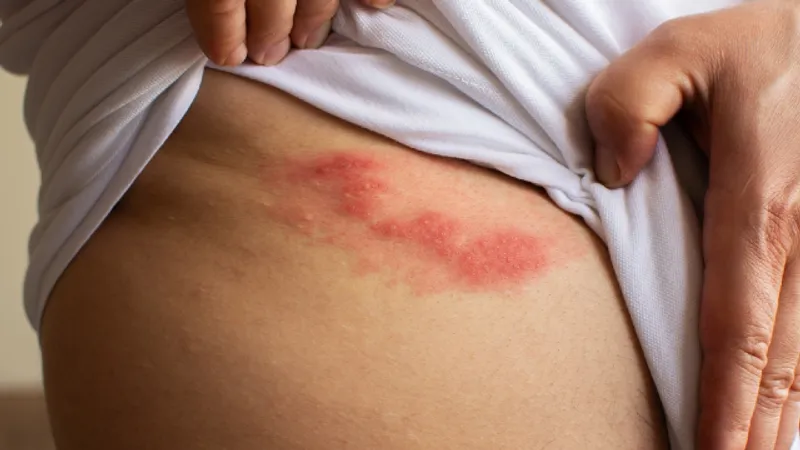
Shingles is a reactivation of a virus the body already carries, and the part that makes it neurological rather than dermatological is the nerve involvement.
The varicella-zoster virus stays dormant in the body after chickenpox and can reactivate later.
Reactivation can cause severe nerve pain and sensory abnormalities.
The rash is characteristically linear, with blisters — vesicles — along the affected area.
Pain or abnormal sensation may come before the rash appears, or alongside it.
Diagnosis is primarily clinical: examination of the rash, the blisters, and the symptoms, with additional testing considered where the diagnosis is uncertain.
The pattern is consistent enough to be recognisable. CDC's description of shingles is the same one: a painful rash illness caused by the reactivation of the virus that causes chickenpox, with long-term nerve pain — postherpetic neuralgia — as its most common complication, and antiviral medicines that work best when started as soon as the rash appears. That last point is the whole reason this page keeps returning to timing.
Who Performs Shingles Treatment at Seoulhoho Hospital
Dr. Ho-Sang Yoon
Representative Director and Chief Neurologist
Dr. Ho-Sang Yoon, Representative Director and Chief Neurologist, sees and assesses each patient personally. He is a board-certified neurologist, a graduate of Dongguk University College of Medicine who completed neurology specialist training at Dongguk University Hospital, and a former clinical professor at the Seoul National University Bundang Hospital Sleep/Epilepsy Center and at Dongguk University Ilsan Hospital.
He is a full member of the Korean Neurological Association, the Korean Society of Clinical Neurophysiology, the Korean Society of Neuromuscular Disorders, the Korean Association of Electromyography and Electrodiagnostic Medicine, the Korean Society of Encephalitis/Neuroinflammation, the Korean Headache Society, and the Korean Stroke Society. The clinic also lists non-surgical pain treatment among his subspecialty technique expertise, which is the relevant part for shingles: the acute illness is treated with antivirals, but what determines how the next several months go is how the nerve pain is handled. Because all consultations are his, the clinician assessing the rash is the clinician assessing the neuralgia.
Shingles Treatment Approach
| Component | What it is for |
|---|---|
| Antiviral medication | The treatment for the shingles infection itself, emphasised early |
| Pain-relieving medication | Used concurrently to control neuralgia, with the type chosen by symptom severity |
| Clinical assessment of neuralgia severity | Determines which pain medication is appropriate |
| Follow-up review | Where symptoms persist or worsen, including for post-herpetic neuralgia |
The clinic describes antiviral medication and pain-relieving medication as being used together rather than in sequence, with the pain medication selected according to how severe the symptoms are. No anaesthesia is required for standard shingles treatment, and no specialised equipment is typically needed for the diagnosis.
Who Is a Good Candidate for Shingles Treatment?
Patients with persistent pain or sensory abnormalities followed by a linear rash with typical blisters.
Patients whose rash is accompanied by neuralgia.
Patients with flu-like symptoms alongside the rash — fever, body aches, muscle pain, or headache.
Patients with pain in a band-like distribution before any rash has appeared.
Patients who want post-herpetic neuralgia risk assessed rather than only the acute rash treated.
People who do not have shingles, or whose symptoms point to a different diagnosis, are not suitable for shingles-specific treatment, and patients with severe or unusual symptoms should have a medical evaluation before treatment starts. That is a real distinction rather than a formality: antiviral treatment aimed at the wrong condition delays the right one.
What to Expect: Procedure, Recovery, and Results Timeline
Evaluation is based on the symptoms — pain or sensory abnormality — together with the characteristic linear rash and the vesicles. The severity of the neuralgia and the accompanying symptoms are assessed to determine the treatment approach. Treatment usually involves an initial consultation and a prescription, with follow-up visits depending on symptom severity and recovery.
At the consultation, provide information about when the symptoms started, how severe the pain is, the rash and blisters, and any existing autoimmune or immune-system disorders and chronic diseases. Those last two are not background detail here — they change the risk of the complication that matters most.
| Stage | Timing |
|---|---|
| Antiviral treatment window | Described as effective within 72 hours of symptom onset |
| Initial consultation and prescription | 1 visit |
| Symptom improvement | Typically begins over 1–2 weeks with appropriate treatment |
| Rash resolution | Generally within 2–4 weeks |
| Overall recovery | Most people recover within 2–4 weeks |
| Nerve pain | May persist longer, particularly where post-herpetic neuralgia develops |
Most people recover within two to four weeks, although nerve pain may persist longer in some cases. The final recovery timeline varies with symptom severity and individual response, and persistent nerve pain can occur, particularly in patients at higher risk of post-herpetic neuralgia.
Aftercare has four parts, and they are all practical: take the prescribed antiviral and pain-relief medication as directed, keep the rash clean and dry, avoid scratching or irritating the affected area, and attend follow-up appointments if symptoms persist or worsen. For travelling patients there is no standard number of days to allow — the required stay depends on symptom severity, the medical evaluation, the response to treatment, and whether follow-up care is needed. Flying should be considered against overall condition, pain control, the treatment plan, and medical advice; patients with significant symptoms or complications may need further evaluation before travelling.
The clinic describes antiviral medication as the treatment for shingles, with pain-relieving medication used concurrently, and does not document a comparative alternative protocol. U.S. patients typically present here to have shingles-related pain and rash treated promptly and to reduce the risk of prolonged nerve pain — the second of which is largely decided in the first three days.
Combining Shingles Treatment with Other Services
Pain treatment. Where neuralgia persists, the clinic's non-surgical pain treatment service addresses nerve pain directly.
Facial palsy assessment. Shingles-related nerve involvement can affect the facial nerve, and antiviral treatment overlaps with the facial palsy pathway.
Nerve conduction studies. Available on site where the extent of nerve involvement is in question.
Internal medicine testing. Relevant where an immune-system or chronic condition is part of the picture.
Limb pain evaluation. Persistent nerve pain in a limb is assessed in the same department.
The overlap that matters most is the first one. A patient whose shingles has settled but whose pain has not is no longer being treated for an infection; they are being treated for nerve pain, and that is a different clinical problem with a different set of tools. Having both sit under one neurologist means the transition happens as a change of approach rather than as a new referral started from scratch. Read more about Seoulhoho Hospital, or contact the clinic.
Safety, Precision, and Clinic Standards
Sudden severe headache, sudden weakness or numbness on one side, sudden trouble speaking or understanding speech, sudden vision loss, or a first-ever seizure are medical emergencies: call local emergency services rather than booking an outpatient appointment.
The risk that dominates shingles is not the acute illness but what can follow it. Shingles can cause severe neuralgia and may lead to post-herpetic neuralgia, in which nerve pain persists after the acute illness has settled. The clinic identifies the higher-risk groups specifically: people aged 50 and older, those with severe acute pain, people with autoimmune or immune-system disorders, and people with chronic diseases such as tuberculosis, cancer, or diabetes. If you belong to one of those groups, say so at the first contact rather than at a follow-up.
The condition itself commonly causes pain or sensory abnormality, a linear rash, skin blisters, feverish sensations, and severe neuralgia, with fever, body aches, muscle pain, and headache depending on severity. Shingles is painful — that is not a side effect of treatment but a feature of the illness, and the pain may arrive before the rash, which is why an unexplained band of pain is worth attention rather than dismissal.
The clinic's stated way of reducing risk is early antiviral treatment within the 72-hour window, with pain relievers used concurrently according to symptom severity. Because shingles is a medical condition rather than an elective procedure, there is no pre-treatment restriction to observe; the thing to avoid is delay when a painful or blistering rash appears.
Consultations are supported by AI real-time translation (smart glasses), which is assistive technology and not a professional medical interpreter service. Seoulhoho Hospital is a registered medical institution in South Korea with business registration number 287-93-01985, and a Registered Medical Institution for Attracting Foreign Patients certified by the Ministry of Health and Welfare under the Medical Overseas Expansion and Foreign Patients Attraction Act. Quality control is documented at physician level: the treating neurologist holds EEG and polysomnography quality-control certification. Treatment rooms are private and single-occupancy.
The Bottom Line
Shingles is a reactivation of the varicella-zoster virus, and its nerve pain is the reason it is a neurological problem.
Antiviral medication is described as effective within 72 hours of symptom onset, so timing drives everything.
Pain-relieving medication runs concurrently, with the type chosen by symptom severity.
Post-herpetic neuralgia is the complication to watch, and several risk groups are identified specifically.
Most people recover in two to four weeks; nerve pain can outlast the rash.
Frequently Asked Questions
How quickly do I need to be seen?
As soon as the symptoms appear. Antiviral medication is described as effective when administered within 72 hours of symptom onset, and that window is the single largest factor a patient can influence. If a painful or blistering rash has appeared, do not wait to see whether it spreads.
The pain started before any rash. Is that shingles?
It can be. Shingles pain or abnormal sensation may occur before the rash or alongside it, and persistent pain or sensory abnormality followed by a linear rash with typical blisters is the presentation the clinic describes. Unexplained band-like pain is worth having assessed rather than waiting for visual confirmation.
Will the pain go away when the rash does?
Not always. The rash generally resolves within two to four weeks, but nerve pain may persist longer, and post-herpetic neuralgia is the condition in which it continues after the acute illness. The clinic treats the neuralgia alongside the infection for exactly this reason.
Am I at higher risk of lasting nerve pain?
The clinic names the higher-risk groups: people aged 50 and older, those with severe acute pain, people with autoimmune or immune-system disorders, and people with chronic diseases such as tuberculosis, cancer, or diabetes. Tell the clinician at the first visit if any of those apply, because it affects how the pain is managed from the start.
Is any anaesthesia or special equipment involved?
No. Diagnosis is primarily based on clinical examination of the rash, blisters, and symptoms, with additional testing considered only where the diagnosis is uncertain, and no anaesthesia is required for standard treatment. Treatment is antiviral medication plus pain relief according to your symptoms.
How should I look after the rash?
Take the prescribed antiviral and pain-relief medication as directed, keep the rash clean and dry, and avoid scratching or irritating the area. Return for follow-up if symptoms persist or worsen rather than waiting for the course of medication to finish.
How long should I stay in Korea?
There is no standard number of days. It depends on symptom severity, the medical evaluation, how you respond to treatment, and whether follow-up care is needed. If you are mid-trip, the more useful question to ask the clinic is when the first review should happen.
Can I fly home?
That should be judged against your overall condition, how well the pain is controlled, the treatment plan, and medical advice. Patients with significant symptoms or complications may need further evaluation before travelling, and pain that is not yet controlled is a reason to ask rather than assume.
Book a Consultation at Seoulhoho Hospital
For shingles evaluation and treatment in Gangdong-gu, Seoul, contact Seoulhoho Hospital. Seoulhoho Hospital is in Gangdong-gu, Seoul. Phone +82-2-441-1190. Opening hours are Monday, Tuesday, Thursday and Friday 09:00–20:00, Wednesday and Saturday 09:00–13:00, with lunch from 13:00 to 14:00, closed Sundays and public holidays. Say when the pain or the rash began — inside 72 hours, that date changes what the treatment can do.
Disclaimer
Medical information provided by Seoulhoho Hospital is for general informational purposes only and does not replace consultation, diagnosis, or treatment by a qualified medical professional. Individual treatment suitability and outcomes may vary. Please consult the hospital for personalized medical advice.