Neurology-Led Care in Gangdong-gu, Seoul · 1:1 Specialist Consultation
en-US

Polysomnography
Overnight polysomnography in Seoul at Seoulhoho Hospital: a painless, radiation-free sleep study in a private sleep room, interpreted directly by a sleep-trained neurologist.
Polysomnography
Medically reviewed by Dr.Ho-Sang Yoon, MD, Board-certified Neurologist
Polysomnography in Seoul is the test that turns a description of bad sleep into a record of it. Polysomnography records and analyses sleep using various instruments in order to diagnose abnormal conditions occurring during sleep. It is performed overnight, does not expose the body to radiation, and at Seoulhoho Hospital in Gangdong-gu, Seoul, it happens in the clinic's own sleep room and is interpreted by the neurologist who ordered it.
What Is Polysomnography?
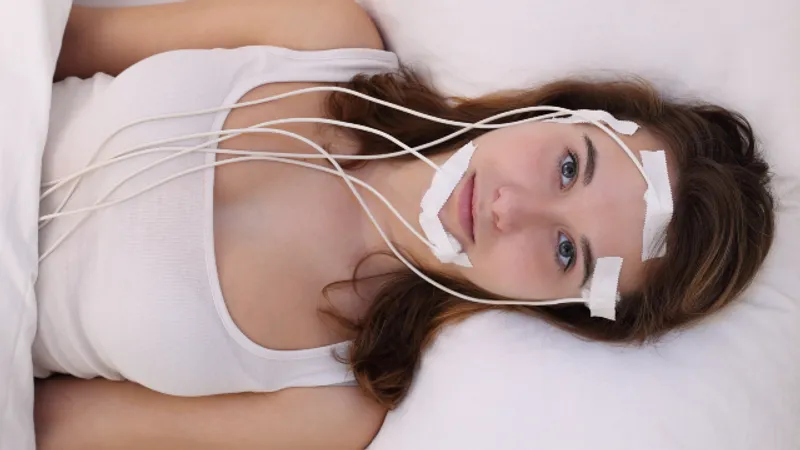
A sleep study is a set of simultaneous recordings, made while you sleep normally, in an environment set up so that sleeping normally is possible.
The test records and analyses sleep conditions to diagnose abnormalities that occur during sleep.
It is performed overnight and does not expose the body to radiation.
The recording uses EEG, an ophthalmic (eye-movement) system, EMG, respiratory monitoring, a thermistor, ECG, and a snoring microphone.
The sleep room has a bed and a video camera for monitoring.
No anaesthesia and no invasive needles are involved.
NHLBI describes the same test in the same terms: sleep studies, also called polysomnography, are painless tests that record brain waves and monitor heart rate, breathing, and blood oxygen level during a full night of sleep, and they help a doctor diagnose sleep-related breathing disorders, sleep-related seizure and movement disorders, and conditions that cause extreme daytime tiredness. The clinic's own claim is deliberately limited to that: a test for recording and analysing sleep in order to diagnose abnormal conditions occurring during sleep.
Who Performs Polysomnography at Seoulhoho Hospital
Dr. Ho-Sang Yoon
Representative Director and Neurology Specialist
Dr. Ho-Sang Yoon, Representative Director and Chief Neurologist, sees and assesses each patient personally. He is a neurologist specialising in sleep disorders and polysomnography, and he is certified as a polysomnography quality-control physician.
He is a board-certified neurologist, a graduate of Dongguk University College of Medicine who completed neurology specialist training at Dongguk University Hospital, and a former clinical professor at the Seoul National University Bundang Hospital Sleep/Epilepsy Center and at Dongguk University Ilsan Hospital. He is a full member of the Korean Neurological Association, the Korean Society of Clinical Neurophysiology, the Korean Society of Neuromuscular Disorders, the Korean Association of Electromyography and Electrodiagnostic Medicine, the Korean Society of Encephalitis/Neuroinflammation, the Korean Headache Society, and the Korean Stroke Society.
The specific thing worth knowing about this service is who reads the recording. The clinic states that sleep studies and EEG are interpreted directly by a neurologist rather than sent to an outside reader, and that the treating physician holds polysomnography quality-control certification. In a test whose output is a scored recording rather than a number, the reader is the test.
What the Recording Measures
| Channel | What it captures |
|---|---|
| EEG | Brain activity, and therefore sleep stage |
| Eye-movement (ophthalmic) system | REM sleep identification |
| EMG | Muscle activity and movement |
| Respiratory monitoring and thermistor | Breathing effort and airflow |
| ECG | Heart rhythm during sleep |
| Snoring microphone | Snoring, recorded rather than reported |
| Video camera | Behaviour and movement during the night |
Those channels are read against each other, which is why a full in-lab study answers questions a simpler test cannot. The clinic names the alternative directly: home sleep apnoea testing, which is simpler and measures fewer parameters than full in-lab polysomnography.
The value of combining them is easiest to see in an example the recording is built for. A patient reports waking exhausted and remembers nothing of the night. Breathing and airflow show whether the airway obstructed; oxygen saturation shows whether it mattered; EEG shows whether each of those events pulled the patient out of deep sleep; ECG shows how the heart responded; and EMG shows whether limb movement — rather than breathing at all — was what fragmented the night. Any one of those channels in isolation would support a plausible story. Together they distinguish between at least three different diagnoses with three different treatments, which is the whole reason the test is run in a laboratory rather than with a wrist device.
Who Is a Good Candidate for Polysomnography?
People with chronic snoring.
People with daytime sleepiness.
People who gasp for air during sleep.
People with observed sleep apnoea episodes.
People whose sleep is unrefreshing despite adequate time in bed.
People whose symptoms could not be adequately evaluated by a home sleep apnoea test.
People for whom a more comprehensive sleep assessment is clinically indicated.
Two groups are not suited to a standard sleep-laboratory setup. Patients with acute, life-threatening, or medically unstable conditions need a different setting, and patients with severe skin allergy to electrode adhesives are a genuine practical exclusion — the sensors are held on with adhesive for eight hours or more, so that allergy needs raising before the appointment is made rather than on arrival.
What to Expect: Procedure, Recovery, and Results Timeline
Before the examination, the patient completes a questionnaire about sleep symptoms or consults with a doctor. The study itself runs from evening to morning.
Arrive at the examination room around evening.
Change into the provided gown.
Sensors are attached; the clinic checks that the equipment is functioning properly and securely attached before sleep begins.
Sleep overnight in the separate sleep room, with recording and video monitoring.
Sensors are removed after waking the following morning.
Preparation is short and makes a real difference to the recording. Avoid caffeine, alcohol, and napping on the day of the test, and wash your hair to remove styling products before sensor application — hair spray and gel interfere with scalp electrode contact, so leaving them out is not a cosmetic request.
| Stage | Timing |
|---|---|
| Overnight stay | Approximately 8–10 hours at the clinic |
| Visit pattern | Evening arrival, completion after waking |
| Recovery | Immediate; adhesive residue washed off, normal activities resumed |
| Preliminary data | Captured during the night |
| Detailed interpretation | Prepared after the data has been scored |
| Results and recommendations | Typically discussed within a few days |
| Follow-up | A short visit to review results |
The examination ends after waking and removing the equipment, and recovery is immediate. After the sensors come off, patients can resume regular routines while the physician analysis is prepared. Diagnostic findings are analysed by a physician, with comprehensive results and treatment recommendations typically discussed within a few days.
For travelling patients the logistics are unusually clean for a diagnostic test: a stay of one to two days is typically enough to complete the overnight study and obtain the initial consultation results. Flying is possible immediately after the session, since there is no surgical downtime and no post-procedure monitoring requirement. What is worth checking before booking is appointment availability for both the night and the results discussion, and whether a CPAP titration study is likely to follow — that would mean a second night.
U.S. patients typically request overnight polysomnography when a sleep disorder needs objective overnight monitoring, particularly where obstructive sleep apnoea or another sleep-related breathing disorder is suspected, where a home sleep apnoea test could not adequately evaluate the symptoms, or where a more comprehensive assessment is clinically indicated.
Combining Polysomnography with Other Services
CPAP titration studies. Frequently combined, where positive airway pressure treatment is indicated and a pressure needs establishing.
Otolaryngology airway examination. Named by the clinic among the assessments polysomnography is frequently combined with.
Autonomic nervous system function evaluation. Available at this clinic, and relevant where autonomic symptoms accompany disturbed sleep.
Neurology consultation and physician interpretation. The clinic's own package around the study.
Insomnia treatment programme. Where the study points to insomnia rather than a breathing disorder.
The first combination is the one to plan for rather than the one to be surprised by. Where the study establishes that positive airway pressure is the treatment, a pressure has to be found, and the clinic describes a two-step process for that: a first-stage study to evaluate the sleep disorder and establish suitable pressure conditions, then a second-stage pressure-adjustment examination. For someone living in Seoul that is two appointments; for someone flying in it is two nights with an interpretation between them, and the difference is worth raising at the first phone call rather than discovering after the first night. Read more about Seoulhoho Hospital, or contact the clinic.
Safety, Precision, and Clinic Standards
Polysomnography is about as low-risk as a diagnostic test gets. There are virtually no medical risks: it is non-invasive, uses no radiation, and requires no anaesthesia or needles. The realistic complaints are minor skin redness or irritation from the sensor adhesives, and the inconvenience of sleeping with sensors attached — noticeable, but not painful.
The clinic's precautions are practical rather than procedural. The study is performed overnight in a separate sleep room, and before sleep the clinic checks that the equipment is functioning properly and securely attached. That check is the difference between a usable recording and a night spent for nothing, since a channel that detaches at 2am removes exactly the signal the study may have been ordered to capture.
The larger consideration is interpretive. A recording has to be read correctly and matched against the patient's symptoms, and the study itself does not determine a treatment outcome. This clinic's answer is physician interpretation by a neurologist holding polysomnography quality-control certification, with multiple physiological signals recorded simultaneously so that they can be read against each other. The clinic operates an Embla NDx (Natus) polysomnography system — named here as the equipment in use, with no regulatory or performance claim attached.
Consultations are supported by AI real-time translation (smart glasses), which is assistive technology and not a professional medical interpreter service. Seoulhoho Hospital is a registered medical institution in South Korea with business registration number 287-93-01985, and a Registered Medical Institution for Attracting Foreign Patients certified by the Ministry of Health and Welfare under the Medical Overseas Expansion and Foreign Patients Attraction Act. The sleep room is private, with a bed, video monitoring, basic overnight amenities, and a restroom.
One more practical point belongs in a safety section rather than a logistics one. The instruction to skip caffeine, alcohol, and the afternoon nap is not about comfort; each of those changes sleep architecture, and a recording made after an evening drink can show breathing events that a sober night would not, or suppress the REM sleep a dream-enactment question depends on. A study that measures an altered night answers a question about that night rather than about the patient. Following the preparation instructions is the single largest contribution a patient makes to the test being worth the night it costs.
What this page does not claim, because the clinic does not: that polysomnography cures anything, that every patient with a sleep complaint needs it, or that a particular treatment outcome follows from it.
The Bottom Line
Polysomnography records sleep overnight to diagnose abnormalities occurring during sleep.
It is painless, non-invasive, and involves no radiation, anaesthesia, or needles.
Seven recording channels plus video are read against each other; a home test measures fewer parameters.
One overnight stay of roughly eight to ten hours, with results typically discussed within a few days.
Severe adhesive allergy and medically unstable conditions are genuine reasons not to have a standard lab study.
Frequently Asked Questions
Does it hurt?
No. Sensors are attached to the skin and scalp, which can be mildly uncomfortable or inconvenient but should not be painful, and there is no anaesthesia and no needle involved. The most common complaint is the awkwardness of falling asleep with the sensors on rather than any physical discomfort.
How long does the whole thing take?
One overnight stay at the clinic of approximately eight to ten hours, followed by a short follow-up visit to review the results. You arrive in the evening and finish after waking the following morning.
How should I prepare?
Avoid caffeine, alcohol, and napping on the day of the test, and wash your hair to remove styling products before you come — no hair spray or gel. Those four things between them do more for the quality of the recording than anything the clinic can do on the night.
What if I cannot sleep in an unfamiliar room?
It is a recognised limitation of the test rather than a disqualification, and a partial night still records data. Coming tired, having skipped the afternoon nap and the evening coffee, is the practical answer, and it is the reason those instructions exist.
When will I get the results?
Preliminary data is captured during the night itself, with detailed interpretation prepared after the recording has been scored. Comprehensive results and treatment recommendations are typically discussed within a few days, at a short follow-up visit.
How does this differ from a home sleep test?
Home sleep apnoea testing is simpler and measures fewer parameters. In-lab polysomnography records brain activity, eye movement, muscle activity, breathing, airflow, heart rhythm, snoring, and video simultaneously, which is what lets it address movement disorders, dream enactment, and sleep-stage questions rather than breathing alone.
Can I fly straight afterwards?
Yes. There is no surgical downtime and no post-procedure monitoring requirement, so you can board a flight after the session. Recovery is immediate — wash off the adhesive residue and carry on with the day, allowing for the fact that you may be tired.
How many days in Korea should I allow?
Typically one to two days, covering the overnight study and the initial results consultation. Allow more if a CPAP titration study is likely to follow, since that means a second night in the sleep room.
Book a Consultation at Seoulhoho Hospital
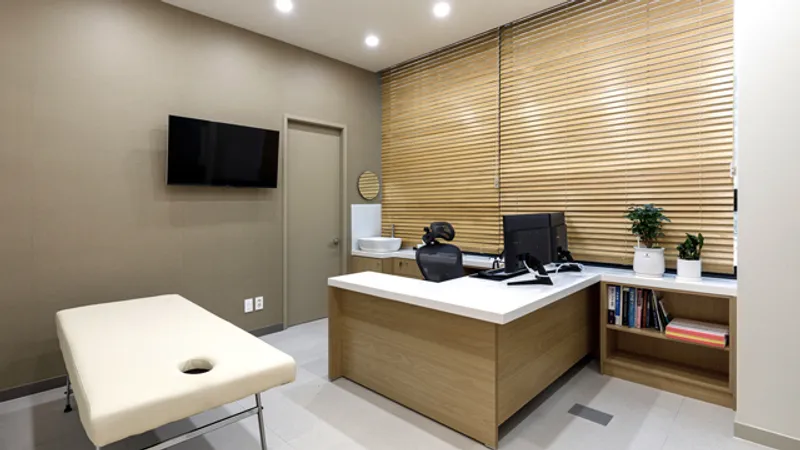
To arrange an overnight polysomnography in Gangdong-gu, Seoul, contact Seoulhoho Hospital. Seoulhoho Hospital is in Gangdong-gu, Seoul. Phone +82-2-441-1190. Opening hours are Monday, Tuesday, Thursday and Friday 09:00–20:00, Wednesday and Saturday 09:00–13:00, with lunch from 13:00 to 14:00, closed Sundays and public holidays. Mention any adhesive or skin allergy when you book, and say how many nights you have in Seoul.
Disclaimer
Medical information provided by Seoulhoho Hospital is for general informational purposes only and does not replace consultation, diagnosis, or treatment by a qualified medical professional. Individual treatment suitability and outcomes may vary. Please consult the hospital for personalized medical advice.