Neurology-Led Care in Gangdong-gu, Seoul · 1:1 Specialist Consultation
en-US

Office Worker IV Program
Office Worker IV Program in Seoul at Seoulhoho Hospital: a physician-assessed intravenous nutrient and hydration session, about 30–60 minutes in a private IV room.
Office Worker IV Program
Medically reviewed by Dr.Ho-Sang Yoon, MD, Board-certified Neurologist
The Office Worker IV Program in Seoul is the clinic's named infusion for people arriving tired, and it is worth reading with the same care as any other intravenous treatment. The programme is an intravenous nutrient therapy that delivers vitamins, minerals, and antioxidants into the bloodstream, with the formulation set after a medical evaluation. Seoulhoho Hospital is in Gangdong-gu, Seoul, and the session runs in one of its private infusion rooms.
What Is the Office Worker IV Program?
It is a single-session intravenous nutrient and hydration service with an assessment in front of it.
Vitamins, minerals, and antioxidants are delivered intravenously.
The process begins with a detailed medical evaluation and symptom assessment by a doctor.
That assessment determines the specific nutritional deficits and tailors the formulation.
Standard intravenous infusion sets, sterile catheters, and calibrated drip-rate monitors are used.
No general anaesthesia is needed; only mild discomfort during the initial small needle insertion.
The regulatory context is the same one that applies to any customised infusion and it belongs at the top rather than the bottom of the page. In the United States, compounded drug preparations are not FDA-approved, which means the agency does not verify their safety, effectiveness, or quality before they are marketed; the FDA's position is that compounded preparations should be used where an FDA-approved drug is not medically appropriate, that unnecessary use may expose patients to serious risks, and that quality standards differ according to the setting in which compounding takes place. Read that alongside the fact that tiredness has many causes, most of which an infusion does not address.
Who Performs the Office Worker IV Program at Seoulhoho Hospital
Dr. Ho-Sang Yoon, M.D.
Representative Director and Chief Neurologist
Seoulhoho Hospital is headed by Dr. Ho-Sang Yoon, a board-certified neurologist and Representative Director who sees and assesses each patient personally. He graduated from Dongguk University College of Medicine, completed neurology specialist training at Dongguk University Hospital, and worked as a clinical professor at the Seoul National University Bundang Hospital Sleep/Epilepsy Center and at Dongguk University Ilsan Hospital.
The assessment is the part that decides whether this programme is the right answer at all. Chronic fatigue, high mental stress, sleep deprivation, and nutrient deficiency are four different problems that present the same way, and only one of them is addressed by giving nutrients intravenously. A clinic that takes the history properly may reasonably conclude that a sleep assessment is the more useful appointment. That possibility is not a weakness of this service; it is a sign that the assessment in front of it is doing something. An infusion programme whose evaluation never concludes "not this" is not evaluating.
What a Session Involves
| Step | What happens |
|---|---|
| 1. Medical assessment | Detailed evaluation and symptom assessment by a doctor, to identify nutritional deficits |
| 2. Preparation | The customised nutrient solution is prepared |
| 3. Cannulation | A small catheter is inserted into a vein |
| 4. Infusion | The solution is infused, with calibrated drip-rate monitoring |
| 5. Individual IV room | The patient remains in the clinic's private infusion and recovery area |
The private room is a practical detail rather than a comfort feature in this context. A patient who has come in tired is likely to sleep, or at least to rest, for the half hour or more the infusion runs, and a single-occupancy room with a recovery area makes that possible in a way an open bay does not. The clinic operates four single-person rooms and three larger single-person rooms across its infusion service.
Who Is a Good Candidate for the Office Worker IV Program?
Individuals with chronic physical fatigue.
Individuals under high mental stress.
Individuals with sleep deprivation.
Individuals with nutrient deficiencies arising from demanding work schedules.
Travellers recovering from long flights or compressed travel schedules.
The exclusions are the same fluid-handling and allergy limits that apply across intravenous nutrient therapy, and they are not soft. Individuals with severe kidney dysfunction, heart failure, fluid overload conditions, or known allergies to specific IV vitamin components are not suitable. Disclose any of those before booking, because each of them makes an intravenous fluid load a hazard rather than an inconvenience.
What to Expect: Procedure, Recovery, and Results Timeline
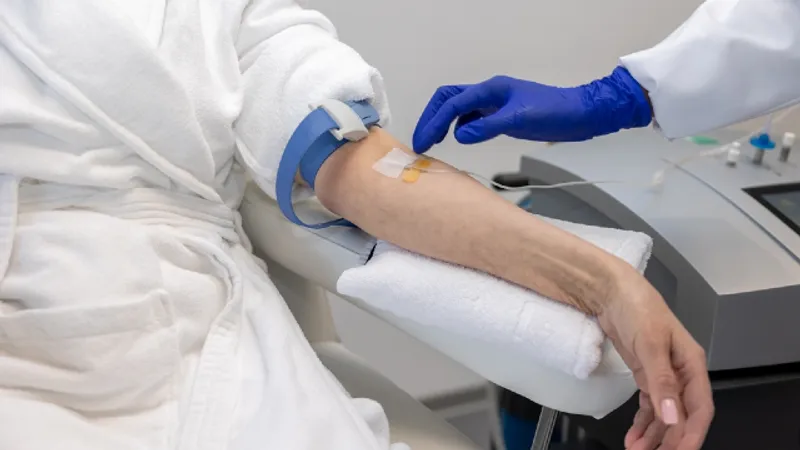
The medical assessment is completed first, the customised nutrient solution is prepared next, and a small catheter is then inserted into a vein to infuse the fluid. Standard infusion sets, sterile catheters, and calibrated drip-rate monitors are used for the administration.
Preparation is two instructions and both matter. Stay well hydrated with oral water beforehand, and do not have the treatment on an empty stomach. Bring a full list of medications and supplements, and disclose allergies, pregnancy where relevant, and any kidney or cardiac condition.
| Stage | Timing |
|---|---|
| Session length | About 30–60 minutes |
| Visits | A single outpatient visit per session |
| Downtime | None; normal daily activities resume immediately |
| Hydration effects | The clinic states these are often felt immediately or within hours |
| Duration of stated effects | The clinic describes them as typically lasting several days to a few weeks, depending on lifestyle |
Aftercare is drink plenty of water, avoid strenuous exertion immediately after the session, and monitor the needle site. The third of those is the one to act on rather than note: swelling, increasing pain, or redness at the site is how vein irritation and infection present, and they need reporting rather than waiting out.
The alternatives are slower and less invasive, and the clinic names them: oral vitamin supplementation and lifestyle changes, which it describes as taking longer to absorb than direct intravenous delivery. For fatigue arising from sleep deprivation or from workload, the lifestyle side of that comparison is not a weaker version of the infusion — it is addressing a different and often more relevant cause. U.S. patients typically request this treatment to manage jet lag, to recover from busy travel schedules, and to restore energy during short international trips, and the honest framing of that is a supportive measure within a trip rather than a treatment for the underlying tiredness.
Combining the Office Worker IV Program with Other Services
Sleep disorder evaluation. Named by the clinic among the combinations, and the more informative appointment where sleep deprivation is the actual problem.
Lifestyle counselling. Named by the clinic among the combinations.
Stress management programmes. Named by the clinic among the combinations.
Laboratory testing. Available through internal medicine, where a nutrient deficiency should be measured rather than assumed.
Autonomic function testing. Relevant where fatigue sits alongside dizziness, palpitations, or orthostatic symptoms.
The first of those deserves emphasis. If the fatigue follows broken sleep, an overnight sleep study at this clinic answers a question that no infusion can. Read more about Seoulhoho Hospital, or contact the clinic.
Safety, Precision, and Clinic Standards
The mild risks the clinic lists for this programme are minor bruising, swelling at the injection site, vein irritation, or temporary dizziness. Within its wider infusion programme, the documented risks also include infection or inflammation at the IV site, allergic or medication reactions, fluid overload, and changes in blood pressure or blood electrolyte levels depending on what is administered, and temporary nausea or headache during or shortly after a session. The clinic's standing instruction across its infusion services is that the patient's medical history and the ingredients used be reviewed with the treating physician beforehand.
The equipment described is standard and appropriate: intravenous infusion sets, sterile catheters, and calibrated drip-rate monitors, used to control the rate of administration. Rate control is the relevant safeguard for a volume-and-nutrient infusion, since both the fluid load and the concentration of what is in it depend on how fast it goes in.
Consultations are supported by AI real-time translation (smart glasses), which is assistive technology and not a professional medical interpreter service. For a treatment where the ingredient list and the allergy history have to be communicated exactly, confirm with the clinic in advance how that will be handled. Seoulhoho Hospital is a registered medical institution in South Korea with business registration number 287-93-01985, and a Registered Medical Institution for Attracting Foreign Patients certified by the Ministry of Health and Welfare under the Medical Overseas Expansion and Foreign Patients Attraction Act. Infusions are given in individual infusion rooms, with a recovery room available.
Finally, what this page does not say. The clinic describes the programme as providing hydration and nutrients and associates it with fatigue support, and it states that hydration effects are often felt within hours. Those are its descriptions. The clinic states that claims about treating, preventing, or curing specific diseases, about boosting immunity, or about detoxifying the body should not be made without appropriate clinical evidence and service-specific approval — and none is on record for this service. So no such claim appears here, no figure is attached to any effect, and the programme is not presented as a treatment for chronic fatigue as a medical condition.
The Bottom Line
A single outpatient session of roughly 30 to 60 minutes, with an assessment first and a private IV room.
Vitamins, minerals, and antioxidants are given intravenously, with the formulation set from the assessment.
Severe kidney dysfunction, heart failure, fluid overload conditions, and IV vitamin allergies are exclusions.
Risks are IV-site bruising, swelling, vein irritation, and temporary dizziness, plus the wider infusion risks.
Where fatigue follows broken sleep or workload, a sleep evaluation or lifestyle change addresses the cause; an infusion does not.
Frequently Asked Questions
What is in the infusion?
Vitamins, minerals, and antioxidants, with the specific formulation tailored after a doctor's evaluation identifies the nutritional deficits. Ask for the actual contents before the line is sited — it is a reasonable request, and knowing the ingredients is also what makes an allergy history useful.
How long does it take?
About 30 to 60 minutes, in a single outpatient visit. There is no downtime, so normal daily activities can resume immediately afterwards.
Does it hurt?
No general anaesthesia is needed, and the only discomfort is the initial small needle insertion into the vein. Some people notice mild discomfort at the site during the infusion.
How should I prepare?
Stay well hydrated with oral water beforehand, and do not arrive on an empty stomach. Bring a list of your medications and supplements, and disclose allergies and any kidney or heart condition — the last of these determines whether the treatment is appropriate at all.
Who should not have it?
Individuals with severe kidney dysfunction, heart failure, fluid overload conditions, or known allergies to specific IV vitamin components. Each of those makes an intravenous fluid and nutrient load unsafe rather than merely unsuitable.
Would supplements or more sleep do the same thing?
Possibly more, depending on the cause. The clinic lists oral vitamin supplementation and lifestyle changes as alternatives that take longer to absorb, and separately offers sleep disorder evaluation as a combination. If the fatigue follows broken sleep, the sleep assessment is the appointment that answers the question.
What should I watch for afterwards?
Drink plenty of water, avoid strenuous exertion immediately after the session, and monitor the needle site. Report swelling, increasing pain, or redness rather than waiting to see whether it settles.
How long do the effects last?
The clinic states that hydration and fatigue effects are often felt immediately or within hours, and describes them as typically lasting from several days to a few weeks depending on lifestyle. Those are the clinic's descriptions rather than measured outcomes, and individual response varies.
Book a Consultation at Seoulhoho Hospital
To discuss the Office Worker IV Program in Gangdong-gu, Seoul, contact Seoulhoho Hospital. Seoulhoho Hospital is in Gangdong-gu, Seoul. Phone +82-2-441-1190. Opening hours are Monday, Tuesday, Thursday and Friday 09:00–20:00, Wednesday and Saturday 09:00–13:00, with lunch from 13:00 to 14:00, closed Sundays and public holidays. Mention any kidney or heart condition and any previous reaction to intravenous vitamins when you enquire, and say what the tiredness has been like — it may point to a different appointment.
Disclaimer
Medical information provided by Seoulhoho Hospital is for general informational purposes only and does not replace consultation, diagnosis, or treatment by a qualified medical professional. Individual treatment suitability and outcomes may vary. Please consult the hospital for personalized medical advice.