Neurology-Led Care in Gangdong-gu, Seoul · 1:1 Specialist Consultation
en-US

Nerve Block / Prolotherapy
Nerve block and prolotherapy in Seoul at Seoulhoho Hospital: injection treatment within a non-surgical pain programme, with the clinic's own injection described as steroid-free.
Nerve Block / Prolotherapy
Medically reviewed by Dr.Ho-Sang Yoon, MD, Board-certified Neurologist
Nerve block and prolotherapy in Seoul are injection treatments, which means the interesting question is not the needle but what precedes it. Nerve Block / Prolotherapy are minimally invasive injection-based treatments used for certain types of pain, and at Seoulhoho Hospital in Gangdong-gu, Seoul, they sit inside a non-surgical pain programme where the source of the pain is identified before anything is injected.
What Are Nerve Block and Prolotherapy?
The two treatments share a delivery method and differ in intent.
A nerve block targets specific nerves to reduce pain signals.
Prolotherapy involves injections intended to support the healing or strengthening of selected tissues.
Both are minimally invasive and generally performed as outpatient procedures.
Ultrasound or other image-guidance technology may be used where appropriate, to help identify the treatment area and improve injection accuracy.
The clinic describes its own nerve injection approach as glucose-based and without steroids.
That last point is the clinic's own distinguishing detail rather than a general feature of the category: it provides glucose-based nerve injection therapy without steroids, intended to relax overexcited nerves and muscles, improve blood flow, and support physical recovery, and it cites the potential adverse effects associated with repeated steroid injections as the reason for avoiding them. NINDS's account of pain provides the category-general frame for why an injection is aimed at a nerve at all: nerve-related pain is a distinct mechanism, not simply a more severe version of tissue pain.
Who Performs Nerve Block / Prolotherapy at Seoulhoho Hospital
Dr. Ho-Sang Yoon M.D.
Representative Director and Neurology Specialist
Dr. Ho-Sang Yoon, Representative Director and Chief Neurologist, sees and assesses each patient personally. The clinic describes direct treatment by a neurologist, with individualised planning based on the diagnostic findings.
He is a board-certified neurologist whose listed subspecialty expertise includes non-surgical pain treatment. He graduated from Dongguk University College of Medicine, completed neurology specialist training at Dongguk University Hospital, and worked as a clinical professor at the Seoul National University Bundang Hospital Sleep/Epepilepsy Center and at Dongguk University Ilsan Hospital. He is a full member of the Korean Neurological Association, the Korean Society of Clinical Neurophysiology, the Korean Society of Neuromuscular Disorders, the Korean Association of Electromyography and Electrodiagnostic Medicine, the Korean Society of Encephalitis/Neuroinflammation, the Korean Headache Society, and the Korean Stroke Society.
For an injection service, the relevant point is that the same neurologist performs the diagnostic evaluation. The clinic's pain approach is explicitly built on identifying the cause rather than suppressing the symptom, and an injection is the endpoint of that sequence rather than its starting point.
Nerve Block and Prolotherapy Compared
| Nerve block | Prolotherapy | |
|---|---|---|
| Target | Specific nerves | Selected tissues |
| Intent | Reduce pain signals | Support healing or strengthening |
| Onset of effect | Relief may occur relatively quickly | Slower, gradual effect as healing progresses |
| Duration | Relief can be temporary | Multiple sessions may be needed |
| Setting | Outpatient | Outpatient |
The practical consequence of that difference in onset is how each one is judged. A nerve block that produces no change is informative almost immediately, because the target was the pain signal itself. Prolotherapy cannot be assessed on the same timescale, since its intent is tissue healing rather than signal interruption, and judging it after a single session would be judging it before it has had the chance to do anything. Which of the two is appropriate follows from what the evaluation identified, not from which sounds preferable.
Who Is a Good Candidate for Nerve Block / Prolotherapy?
People with localised pain who have already been medically evaluated.
People with persistent pain where an injection-based treatment may help.
People with persistent musculoskeletal pain exploring non-surgical options.
People with nerve-related pain identified through evaluation.
People who want to understand the non-surgical options before considering surgery.
The exclusions here are more specific than for an assessment, because an injection is involved. People with an active infection near the injection site, certain bleeding or clotting disorders, known allergies to the planned injection materials, or conditions requiring urgent treatment may not be suitable or may need to postpone. Those four are the reason the allergy list, the blood-thinner question, and the infection check all happen before anything is prepared.
What to Expect: Procedure, Recovery, and Results Timeline
The doctor reviews symptoms and medical history, performs a physical examination, identifies the likely source of pain, and may use imaging or other diagnostic tests before selecting the treatment. Then:
The treatment area is identified and cleaned.
The patient is positioned comfortably.
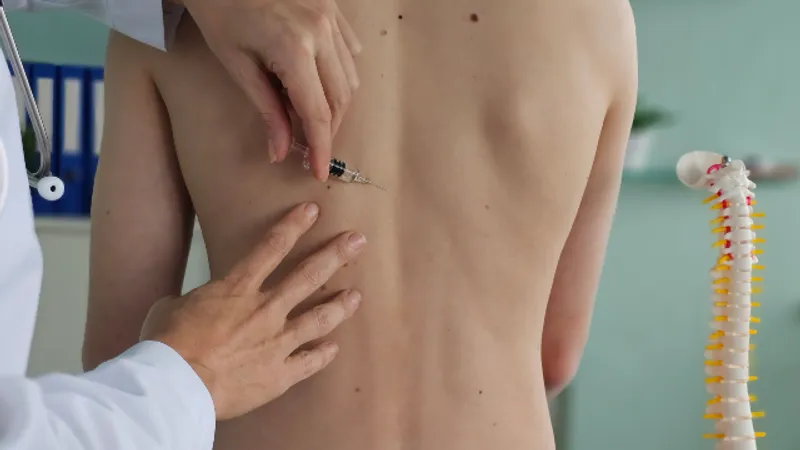
The selected injection is administered to the targeted nerve or tissue.
The patient may be monitored briefly afterwards before leaving.
Preparation is disclosure and instruction-following. Provide your medical history, current medications, allergies, and relevant imaging or test results, and follow any instructions on medications, food, or activity. Do not stop prescribed medication without medical advice, and tell the doctor specifically about blood-thinning medication, supplements, allergies, and existing conditions.
On pain control during the injection, the picture in the clinic's own documentation is not uniform and this page will not pretend otherwise. The general description of the procedure notes that local anaesthetic or another numbing method may be used depending on the treatment area and individual needs, while the clinic's description of its own nerve injection emphasises a glucose-based preparation without steroid. Ask the clinic directly what will be used in your case rather than assuming either answer.
| Stage | Timing |
|---|---|
| The injection | Generally a short outpatient procedure |
| Total visit | Longer, with consultation, preparation, and observation |
| Nerve block relief | May occur relatively soon after treatment |
| Prolotherapy effect | Slower and gradual, as healing progresses |
| Temporary soreness or bruising | May occur for several days |
| Additional sessions | Recommended depending on treatment response |
Recovery is generally short, although temporary soreness or discomfort may occur for several days. Activity restrictions, where they apply, depend on the treatment performed and the treated area, and strenuous activity may need to be limited temporarily. The degree and duration of relief vary depending on the condition, the treatment area, and the individual patient, and the final outcome depends on the underlying condition and the response — a follow-up assessment may be needed to judge effectiveness and whether further sessions are appropriate.
Aftercare is monitoring and a graded return. Follow the doctor's instructions, monitor the injection site for unusual symptoms, and return to normal activities gradually as advised. For travelling patients, many injection treatments can be performed on an outpatient basis during a short stay, though the required time depends on the treatment plan and on whether additional evaluation or follow-up is needed. Patients may generally travel once medically stable after the procedure and any required observation is complete.
Alternatives depend on the cause of the pain and include medication, physical therapy, exercise-based rehabilitation, lifestyle modification, other injection treatments, or surgery where medically indicated. U.S. patients typically seek these treatments for pain relief, improved function, and treatment of persistent musculoskeletal or nerve-related pain, particularly when exploring non-surgical options — and the honest version of that comparison includes the possibility that surgery is the better answer for a given diagnosis.
Combining Nerve Block / Prolotherapy with Other Treatments
Limb, leg and back pain evaluation. The assessment that normally precedes an injection here.
Rehabilitation and physical therapy. Named by the clinic as combinable where clinically appropriate.
Medication. Used alongside injection treatment as part of pain management.
3B IV therapy and personalised IV therapy. Listed among the clinic's pain-related options.
Autonomic nervous system treatment. Where autonomic findings accompany the pain.
Read more about Seoulhoho Hospital, or contact the clinic.
Safety, Precision, and Clinic Standards
Sudden severe headache, sudden weakness or numbness on one side, sudden trouble speaking or understanding speech, sudden vision loss, or a first-ever seizure are medical emergencies: call local emergency services rather than booking an outpatient appointment.
This is the page on which the risk section matters most, because an injection is the only thing on this clinic's neurology list that breaks the skin. The common temporary effects are soreness, tenderness, bruising, swelling, or mild discomfort around the injection site. The potential risks are bleeding, infection, allergic reaction, nerve irritation or injury, and temporary worsening of pain, and the clinic states that the specific risks vary with the injection technique, the treatment area, and the materials used. Some brief discomfort during the injection — stinging or pressure — is expected.
The clinic has not published a formal risk-reduction protocol for this procedure, and this page does not invent one. What is documented is the surrounding practice: the treatment area is identified and cleaned before the injection, the patient may be monitored briefly afterwards, ultrasound or other image guidance may be used to improve accuracy where appropriate, and the underlying source of pain is identified through evaluation before treatment is selected. The clinic also has not published a complete complication list for its glucose-based injection specifically — ask for it at the consultation, and treat the absence of a published list as a reason to ask rather than as reassurance.
Consultations are supported by AI real-time translation (smart glasses), which is assistive technology and not a professional medical interpreter service. For a procedure where consent and the description of sensation both matter, it is worth confirming with the clinic in advance how that will be handled. Seoulhoho Hospital is a registered medical institution in South Korea with business registration number 287-93-01985, and a Registered Medical Institution for Attracting Foreign Patients certified by the Ministry of Health and Welfare under the Medical Overseas Expansion and Foreign Patients Attraction Act. Treatment rooms are private and single-occupancy.
The clinic has not documented an approved claim statement for this specific service, so this page makes none beyond what its own procedure description supports: a nerve block targets nerves to reduce pain signals, prolotherapy injections are intended to support healing or strengthening of tissue, and the degree and duration of relief vary by condition, area, and individual.
The Bottom Line
A nerve block targets nerves to reduce pain signals; prolotherapy aims to support tissue healing.
Nerve block relief may be relatively quick but can be temporary; prolotherapy works gradually and may need several sessions.
The clinic describes its own nerve injection as glucose-based and without steroids.
Active infection near the site, bleeding or clotting disorders, and material allergies are reasons to postpone.
Recovery is short, with soreness or bruising for a few days and strenuous activity temporarily limited.
Frequently Asked Questions
How soon will it work?
A nerve block may provide pain relief relatively soon after treatment, while prolotherapy generally takes longer, with a gradual effect as healing progresses. The timing varies with the condition and individual response, and prolotherapy in particular may require multiple sessions before the picture is clear.
Is the injection painful?
Some brief discomfort — stinging or pressure — may occur during the injection, and temporary soreness or tenderness can follow. How much varies between patients. Ask the clinic what pain control will be used for your treatment, since the approach depends on the area and on individual need.
Is it a steroid injection?
The clinic describes its own nerve injection approach as glucose-based and without steroids, citing the potential adverse effects of repeated steroid injections as its reason. If what you are offered differs from that, it is worth asking what is being injected and why before agreeing.
What can go wrong?
The potential risks are bleeding, infection, allergic reaction, nerve irritation or injury, and temporary worsening of pain, with the specific risks depending on the technique, the area, and the materials used. Common temporary effects are soreness, tenderness, bruising, swelling, or mild discomfort at the site.
Who should not have it?
People with an active infection near the injection site, certain bleeding or clotting disorders, known allergies to the planned injection materials, or conditions requiring urgent treatment. Blood-thinning medication is the item most often overlooked — disclose it before the appointment, not on the day.
How long is the appointment?
The injection itself is generally a short outpatient procedure. The total visit is longer, because it includes consultation, preparation, and post-treatment observation. Plan for a visit rather than for the duration of the injection.
How many days should I stay in Korea?
Many injection treatments can be performed on an outpatient basis during a short stay. The required time depends on the treatment plan and on whether additional evaluation or follow-up is needed — and if further sessions are likely, that is worth establishing before you book return travel.
When can I fly?
Generally once you are medically stable after the procedure and any required observation is complete. Because strenuous activity may need to be limited temporarily, it is also worth asking how that applies to carrying luggage and to a long flight.
Book a Consultation at Seoulhoho Hospital
For nerve block or prolotherapy in Gangdong-gu, Seoul, contact Seoulhoho Hospital. Seoulhoho Hospital is in Gangdong-gu, Seoul. Phone +82-2-441-1190. Opening hours are Monday, Tuesday, Thursday and Friday 09:00–20:00, Wednesday and Saturday 09:00–13:00, with lunch from 13:00 to 14:00, closed Sundays and public holidays. Mention any blood-thinning medication and any allergy when you book — both can change whether the appointment goes ahead.
Disclaimer
Medical information provided by Seoulhoho Hospital is for general informational purposes only and does not replace consultation, diagnosis, or treatment by a qualified medical professional. Individual treatment suitability and outcomes may vary. Please consult the hospital for personalized medical advice.