Neurology-Led Care in Gangdong-gu, Seoul · 1:1 Specialist Consultation
en-US

Blood Test / General Health Screening
Blood testing and general health screening in Seoul at Seoulhoho Hospital: tests selected against your history and symptoms, then interpreted by a physician, not reported alone.
Blood Test / General Health Screening
Medically reviewed by Dr.Ho-Sang Yoon, MD, Board-certified Neurologist
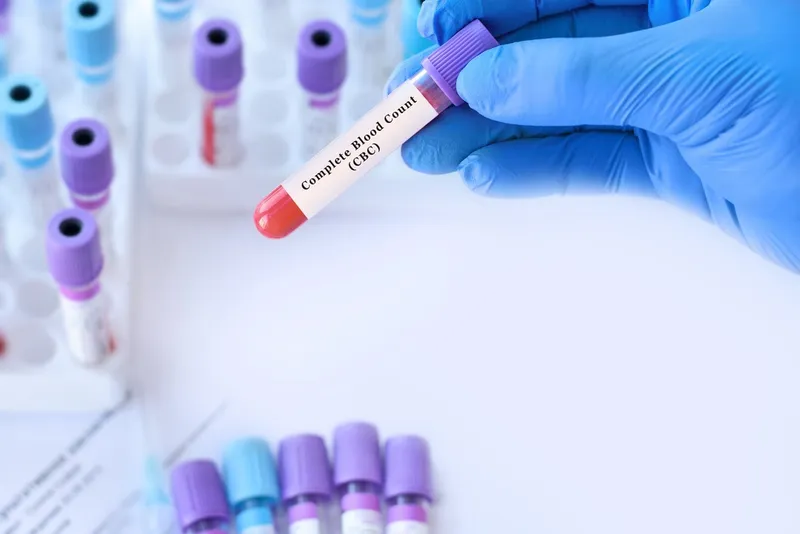
Blood testing and general health screening in Seoul are easy to buy and easy to misread, and the difference between the two experiences is whether a physician interprets the numbers. Blood tests and general health screening are routine assessments used to evaluate overall health and identify potential abnormalities, and at Seoulhoho Hospital in Gangdong-gu, Seoul, the results are read alongside your history and symptoms rather than handed over as a sheet of values.
What Is Blood Test / General Health Screening?
Screening is a measurement exercise with a clinical frame around it. The measurement is the easy part.
Depending on the screening package, testing may include blood counts, blood sugar, cholesterol, liver and kidney function, and other markers.
A healthcare professional reviews medical history, symptoms, medications, lifestyle, and health concerns before selecting the tests.
Results are interpreted alongside clinical information rather than used as a diagnosis by themselves.
Screening can provide objective information about blood counts, metabolic health, organ function, and other health markers.
It may help identify abnormalities that require monitoring or further evaluation.
The last two points are the honest claim, and they stop short of what screening is often sold as. MedlinePlus puts the same boundary around medical testing generally: tests can help detect a condition, reach a diagnosis, plan treatment, check whether treatment is working, or monitor a condition over time — each of which is a contribution to a clinical decision rather than a decision in itself. A result also represents the patient's health status at the time of testing, and nothing more.
Who Performs Blood Test / General Health Screening at Seoulhoho Hospital
Dr. Ho-Sang Yoon M.D.
Representative Director and Neurology Specialist
The clinic describes the service as clinic-based medical screening with physician review, which is the part that matters for a screening. Its documented structure: Seoulhoho Hospital is headed by Dr. Ho-Sang Yoon, a board-certified neurologist and Representative Director who sees and assesses each patient personally. He graduated from Dongguk University College of Medicine, completed neurology specialist training at Dongguk University Hospital, and worked as a clinical professor at the Seoul National University Bundang Hospital Sleep/Epilepsy Center and at Dongguk University Ilsan Hospital.
Whoever performs the collection, the clinical work is the same and is documented: history, symptoms, medications, lifestyle, and concerns reviewed first; tests selected against those; results interpreted in that context; further testing or medical evaluation recommended where an abnormal finding appears.
What a Screening Can Include
| Area | Examples of what is measured |
|---|---|
| Blood counts | Red and white cell measures |
| Metabolic markers | Blood sugar |
| Lipids | Cholesterol |
| Organ function | Liver and kidney function |
| Other markers | As selected by the package and the clinical review |
General health screening may also be combined with blood pressure measurement, body measurements, urinalysis, imaging, cardiovascular assessment, or other preventive examinations. The clinic states the governing principle plainly: the combination should be based on individual health needs rather than on testing every available marker.
Who Is a Good Candidate for Blood Test / General Health Screening?
Adults seeking a routine preventive health check.
People monitoring a known health risk.
People with symptoms that require laboratory evaluation.
Patients who want a broader health assessment while travelling.
Patients who want previous results compared against current ones.
The appropriate tests depend on age, medical history, symptoms, and individual risk factors. There is generally no single exclusion for routine blood testing, but some tests require postponement or special preparation, and patients should disclose pregnancy, medications, medical conditions, recent illness, or any difficulty with blood collection before testing. Difficulty with collection is worth mentioning specifically — it changes how the appointment is run rather than whether it happens.
What to Expect: Procedure, Recovery, and Results Timeline
Consultation.
Selection of appropriate tests.
Preparation, if required.
Blood collection.
Laboratory analysis.
Review of the results.
Additional testing or medical evaluation may be recommended if an abnormal finding is identified. Preparation depends on which tests are ordered: some blood tests require fasting and others do not, and patients should follow the provider's instructions on food, drinks, medications, and timing. Avoid food or drink only where fasting has been specifically instructed — fasting unnecessarily is a common and avoidable discomfort.
| Stage | Timing |
|---|---|
| Blood collection | Brief; no anaesthesia |
| Recovery | Immediate for most people |
| Routine laboratory results | Some may be available the same day |
| Specialised tests | Longer, depending on the test |
| Final results | Once all selected tests are processed and reviewed |
Blood collection normally does not require anaesthesia. A brief needle prick or mild discomfort may occur, and patients can usually return to normal activities immediately after the sample is taken. Most people recover immediately; if dizziness or faintness occurs, brief rest and observation may be recommended before leaving. The clinic has not documented a fixed appointment duration for this service, so this page does not state one.
Aftercare is simple: keep pressure on the collection site for several minutes, follow any laboratory instructions given afterwards, stay hydrated, and eat after a fasting test unless a healthcare professional has said otherwise. For travelling patients, some screening programmes can be completed in a single visit, but the required stay depends on the screening package and on when results become available — confirm the schedule before fixing the trip. The clinic has not documented a specific interval before flying after a blood test, and this page does not invent one.
U.S. patients typically request comprehensive screening to monitor general health, investigate symptoms, or identify potential issues early, and it is also useful when preventive care or a broader health assessment is wanted during a trip. The practical caution is the same one the clinic states: a screening built around your actual risks is more useful than one built around the longest available list of markers.
There is a second reason that caution matters, and it is statistical rather than clinical. Reference ranges are built so that a proportion of healthy people fall outside them, which means that the more markers a panel contains, the more likely it becomes that at least one comes back flagged in a person who is well. Each of those then has to be explained, sometimes repeated, occasionally investigated — and for a patient who is about to fly home, an unexplained borderline value is a poor souvenir. That is not an argument against screening; it is an argument for a panel chosen against a person. It is also the reason the physician review at the end is not an administrative step: interpreting a marginal result requires knowing the history, the medications, the recent illnesses, and what the patient was doing the day before the sample was taken.
Combining Screening with Other Services
Flu testing and vaccination. Can be combined with blood testing into a single general health screening visit.
Chest and abdominal examination. Adds a physical assessment to the laboratory picture.
Blood pressure and body measurements. Listed by the clinic among the services screening may be combined with.
Urinalysis, imaging, cardiovascular assessment. Available as additions where individual health needs justify them.
Neurology. Blood testing is part of the clinic's neurological evaluation set where a systemic cause needs excluding.
Combining is where a screening visit earns its place in a trip. A patient who has blood drawn, is examined, has blood pressure measured, and is vaccinated in one appointment has covered in an hour what would otherwise be three separate errands, and the physician reviewing the laboratory values has the examination findings in front of them at the same time. Read more about Seoulhoho Hospital, or contact the clinic to ask which tests suit your history.
Safety, Precision, and Clinic Standards
Blood collection is generally low risk. The effects that do occur are temporary pain, bruising, minor bleeding, dizziness, or fainting, and they are usually short-lived. Rarely, the puncture site may become infected or bleed for longer than expected — which is the reason for the several minutes of pressure afterwards rather than a quick plaster and out the door.
The clinic has not documented a formal risk-reduction protocol specific to blood collection, and this page does not supply one. What is documented is the clinical framing around the test, and it is the part that affects a patient more than the needle does: tests are selected after a review of history, symptoms, medications, and lifestyle, results are interpreted alongside that clinical information rather than in isolation, and abnormal findings lead to further evaluation rather than to a conclusion. A screening that reports values without that context is a different and lesser product, whatever its length.
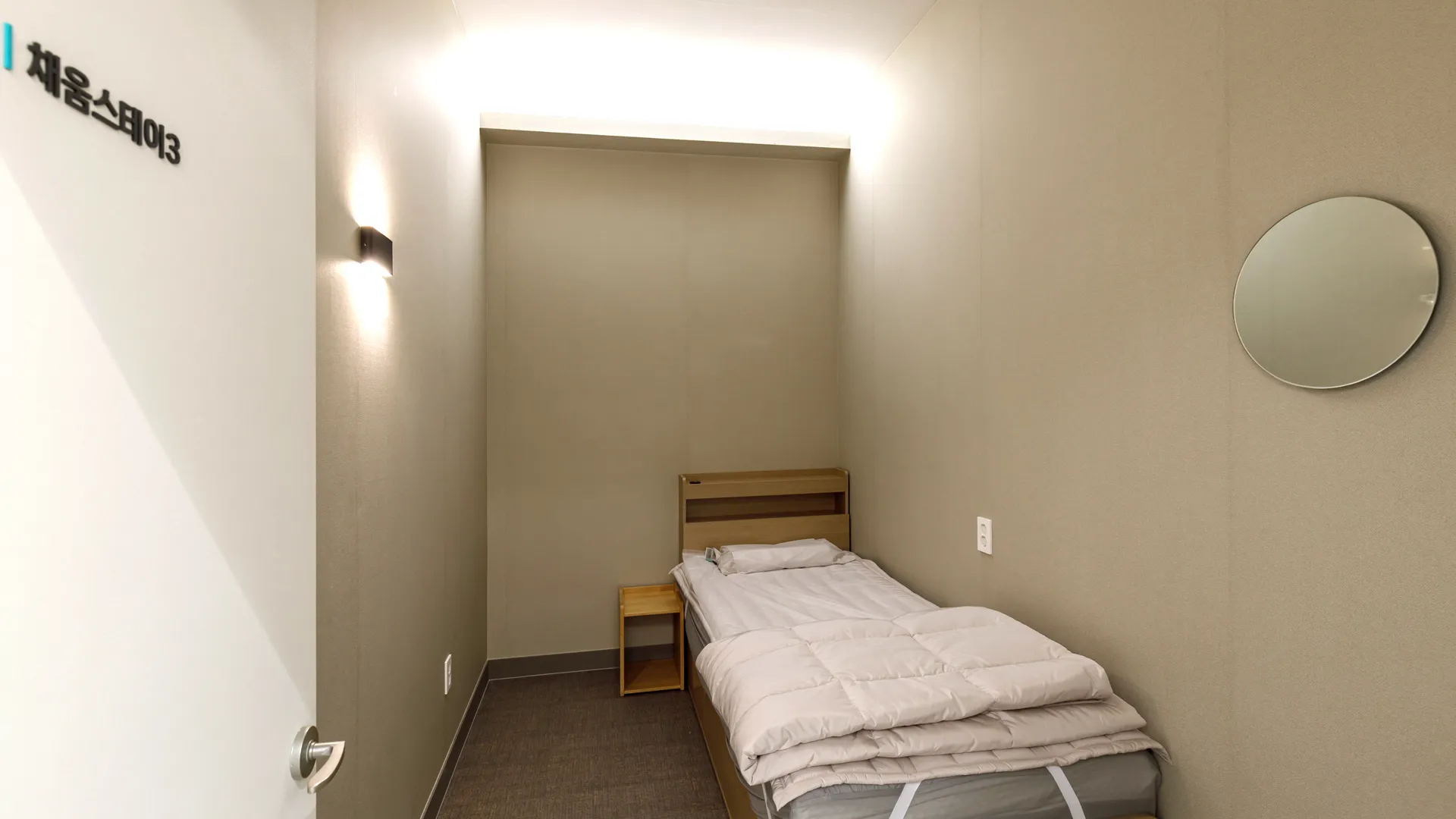
Consultations are supported by AI real-time translation (smart glasses), which is assistive technology and not a professional medical interpreter service. Seoulhoho Hospital is a registered medical institution in South Korea with business registration number 287-93-01985, and a Registered Medical Institution for Attracting Foreign Patients certified by the Ministry of Health and Welfare under the Medical Overseas Expansion and Foreign Patients Attraction Act. Treatment rooms are private and single-occupancy. Pediatric care is outside the scope of what this clinic presents for this market.
The claim the clinic makes is limited to this: blood testing and general screening can assess selected health markers and may help identify abnormalities requiring further evaluation. No figure, no detection rate, and no assurance about what a normal result rules out.
The Bottom Line
Screening measures selected markers — blood counts, blood sugar, cholesterol, liver and kidney function, and others.
The tests are chosen against your history, symptoms, medications, and risks, not from a fixed maximum list.
Results are interpreted alongside clinical information; a value is not a diagnosis.
A result describes your health at the time of testing, and nothing beyond that.
Collection is low risk, with bruising, brief bleeding, dizziness, or fainting as the usual short-lived effects.
Frequently Asked Questions
Do I need to fast?
It depends which tests are ordered — some blood tests require fasting and others do not. Follow the provider's instructions on food, drinks, medications, and timing, and do not fast unless you have specifically been told to. Ask when you book, so you are not doing it unnecessarily.
How long until I get results?
Some routine laboratory results may be available the same day. Specialised tests take longer, and the final picture is complete once all the selected tests have been processed and reviewed. If you are on a short trip, ask about turnaround before choosing the package.
Does it hurt?
Blood collection normally causes only a brief needle prick or mild discomfort, and no anaesthesia is involved. Most people return to normal activities immediately afterwards. If you have previously had difficulty with blood collection or have fainted during it, say so before the appointment starts.
What can go wrong?
Temporary pain, bruising, minor bleeding, dizziness, or fainting are the common effects and are generally short-lived. Rarely, the puncture site becomes infected or bleeds for longer than expected. Keeping pressure on the site for several minutes afterwards is the simplest way to avoid the second of those.
Should I just have every test available?
The clinic's own position is no: the combination should be based on individual health needs rather than on testing every available marker. More tests produce more borderline values, each of which then needs explaining, and a screening designed around your actual risks is the more useful document.
Can this diagnose a condition?
Not on its own. Screening can assess selected health markers and may identify abnormalities requiring further evaluation, and results are interpreted alongside your clinical information. Where something is abnormal, the next step is additional testing or a medical evaluation rather than a conclusion.
How long should I stay in Korea for this?
Some screening programmes can be completed in one visit, but it depends on the package and on when the results are available. Confirm the schedule before planning the trip, particularly if you want the results explained in person rather than sent on.
What should I bring?
Your medical history, a current medication list, and previous test results if you have them — the last of those is what turns a single snapshot into a trend. Also disclose pregnancy, recent illness, medical conditions, and any previous difficulty with blood collection.
Book a Consultation at Seoulhoho Hospital
For blood testing or general health screening in Gangdong-gu, Seoul, contact Seoulhoho Hospital. Seoulhoho Hospital is in Gangdong-gu, Seoul. Phone +82-2-441-1190. Opening hours are Monday, Tuesday, Thursday and Friday 09:00–20:00, Wednesday and Saturday 09:00–13:00, with lunch from 13:00 to 14:00, closed Sundays and public holidays. Ask about fasting and result turnaround when you book — both change how the visit should be scheduled.
Disclaimer
Medical information provided by Seoulhoho Hospital is for general informational purposes only and does not replace consultation, diagnosis, or treatment by a qualified medical professional. Individual treatment suitability and outcomes may vary. Please consult the hospital for personalized medical advice.