Neurology-Led Care in Gangdong-gu, Seoul · 1:1 Specialist Consultation
en-US

Shingles: The Rash Is Late, and the Clock Starts Earlier
Seoulhoho Hospital names a 72-hour antiviral window and a list of who is at higher risk of lasting nerve pain. Both matter more than the rash itself.
Shingles: The Rash Is Late, and the Clock Starts Earlier
Medically reviewed by Dr. Ho-Sang Yoon, Representative Director and Chief Neurologist, Seoulhoho Hospital
Shingles is filed under neurology at Seoulhoho Hospital rather than under dermatology, and the published description explains why in its first sentence.
It is described as a neurological disease caused by reactivation of the varicella-zoster virus, which remains dormant in the body after chickenpox, and which can cause severe nerve pain, sensory abnormalities, and a characteristic linear rash with blisters.
Nerve pain first. Rash second. That ordering is not stylistic — it reflects the sequence patients actually experience, and it is the reason so many people miss the window that matters.
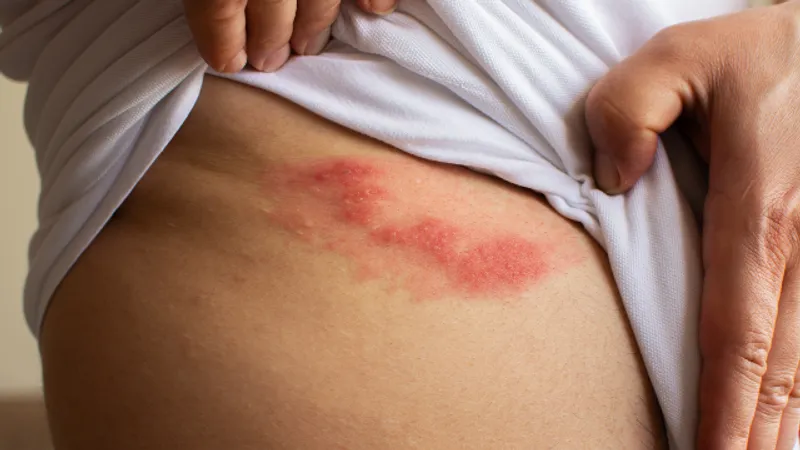
The window, and why it is easy to miss
The clinic states it plainly: early treatment is emphasized because antiviral medication is effective when administered within 72 hours of symptom onset.
Its published candidate description shows where the trap is. The people it describes are those experiencing persistent pain or sensory abnormalities followed by a linear rash and typical blisters.
Followed by. The pain comes first, and it can come days before anything is visible.
So a patient who waits for the rash to confirm what they are dealing with has spent part of a 72-hour window waiting. That is the single most useful thing to know about this condition in advance, and it cannot be acted on retrospectively.
The National Library of Medicine's general material on shingles and on chickenpox covers the relationship between the two in patient language.
What the treatment consists of
The published steps are a five-part sequence: consultation and symptom assessment; evaluation of the rash, blisters and sensory symptoms; assessment of pain severity; antiviral medication prescribed when appropriate; and pain-relief medication used concurrently according to symptom severity.
The approved statement puts the same thing in one line: early antiviral treatment is emphasized, with administration within 72 hours of onset described as effective, and pain-relieving medication may be used concurrently with the type depending on symptom severity.
Two medications, running together, with the second scaled to how much it hurts. The clinic notes that no anesthesia is required.
The National Library of Medicine's overviews of pain and pain relievers cover the general categories.
The risk that outlasts the illness
This is the part the published record treats most seriously, and it deserves the same weight here.
Shingles can cause severe nerve pain and may lead to post-herpetic neuralgia, in which nerve pain persists after the acute illness. The clinic names four groups at higher risk:
- people aged 50 and older
- those with severe acute pain
- those with autoimmune or immune-system disorders
- those with certain chronic diseases
That list is worth knowing before anything happens, because two of the four are known to you in advance. If you are over 50, or you have an immune-system condition, you belong to a group for whom the 72-hour window carries more consequence than it does for others.
The National Library of Medicine's overview of the immune system and its disorders covers the general background.
The published timeline
Three figures, all ranges:
Most people recover within 2 to 4 weeks, although nerve pain may persist longer in some cases, particularly if post-herpetic neuralgia develops.
Symptoms typically begin improving over 1 to 2 weeks with appropriate treatment.
The rash generally resolves within 2 to 4 weeks. Pain may persist longer in some patients.
Notice that the pain timeline and the rash timeline are stated separately. The visible part resolving is not the same as the condition being over, and a patient who expects the two to end together will be surprised by the one that does not.
What this means for travel
Two situations, and they call for opposite responses.
Symptoms starting now. The window is 72 hours. Seek assessment where you are, today. No trip fits inside it, and the published emphasis on early antiviral treatment is the reason.
Symptoms starting during a trip to Korea. Then the clinic is local to you, and its published route is a consultation and symptom assessment. The consultation enquiry page is the published channel, and the clinic states that the physician sees patients personally.
For anyone in the second situation, the practical point is that a rash appearing on day three of a holiday is not something to manage with the medicine cabinet until you get home.
Facial involvement changes the picture
Worth flagging because the clinic's own material connects the two services.
Its facial palsy material states that antiviral treatment may be used when shingles-related facial palsy is suspected. Shingles affecting the face — and particularly anything involving the eye or the ear — is a different situation from shingles on the trunk, and the overlap between the two conditions is the reason both are handled by the same specialty here.
If a shingles rash appears on the face, or if facial weakness appears alongside one, that is an argument for being seen quickly rather than for waiting to see how it develops.
Preparation and aftercare
The clinic asks patients to provide information about symptom onset, pain severity, rash, blisters, existing autoimmune or immune-system disorders, and chronic diseases during consultation.
Symptom onset heads that list for an obvious reason — it is what determines whether the 72-hour window is still open, and it is a detail people are vague about precisely when precision matters.
The published aftercare is practical: take prescribed antiviral and pain-relief medications as directed, keep the rash clean and dry, avoid scratching or irritating the affected area, and attend follow-up appointments if symptoms persist or worsen.
"Persist or worsen" is the trigger to return. Given that nerve pain is described as sometimes outlasting the rash, that is a trigger worth remembering past the point where the skin looks better.
Who this is not for
The published exclusions are short: people who do not have shingles, or who have symptoms requiring a different diagnosis, may not be suitable for shingles-specific treatment, and patients with severe or unusual symptoms should undergo medical evaluation before treatment.
That is a reminder that pain and a rash have many causes, and that a self-diagnosis followed by a request for a specific medication is not how this should start. The assessment decides.
Visits
The clinic describes treatment as usually involving an initial consultation and prescription of medication, with follow-up visits depending on symptom severity and recovery, and an overall duration that varies by individual.
One appointment to start. More if the pain does not follow the expected course — which, given the post-herpetic neuralgia risk, is a real possibility for the higher-risk groups named above.
The clinic's description of its approach sets out the general care sequence those visits would follow.
Why the pain comes first, and what it feels like
The clinic's description puts persistent pain or sensory abnormality ahead of the rash, and that ordering is the single most practically useful thing on the page. It is worth expanding on what patients actually report.
The early sensation is often not recognizable as an infection at all. It follows a band or a strip on one side of the body, because the virus reactivates along a single nerve pathway, and it can be described as burning, itching, aching, or as a strange sensitivity where clothing touches the skin. Some people describe it as a deep ache that seems muscular.
Because it is one-sided and band-shaped, it is frequently attributed to something mechanical — a pulled muscle, a trapped nerve, an awkward night's sleep. That misattribution is where the window goes.
The distinguishing feature is that it does not behave like a mechanical problem. It does not improve with position or rest in the way a strain does, and it is often accompanied by the flu-like symptoms the clinic names: fever, body aches, muscle pain or headache.
None of that is a diagnosis, and this article is not suggesting anyone self-treat on the basis of it. What it justifies is a lower threshold for being seen — because the cost of being assessed and told it is nothing is small, and the cost of waiting past 72 hours is described in the clinic's own risk note.
The higher-risk groups, and what they should do differently
Two of the four named groups are knowable in advance: being aged 50 or older, and having an autoimmune or immune-system disorder. Certain chronic diseases make a third.
For anyone in those groups, the practical implication is not anxiety but preparation.
Know what the early sensation is, so that a one-sided band of odd pain prompts a call rather than a wait.
Know who you would call, at home and while traveling. The window is short enough that finding a provider from scratch consumes a meaningful fraction of it.
Mention the risk factor when you call. The published risk note treats these groups differently, and saying so shapes how urgently the request is handled.
The fourth group — those with severe acute pain — cannot be known in advance, but it is worth recognizing that severity itself is described as a risk marker for lasting nerve pain rather than only as a comfort problem.
Why it is filed under neurology
A closing observation that explains the whole shape of the service.
Everything about the acute illness that patients notice is on the skin, and every instinct sends them toward a skin specialist. The clinic files it under neurology because the virus lives in nerve tissue, travels along a nerve pathway, and does its lasting damage there.
That is also why the complication the published record treats most seriously is a nerve complication rather than a skin one, and why the follow-up trigger is pain that persists rather than a rash that lingers.
A patient who understands that the rash is the visible consequence of a nerve event, rather than the event itself, will make better decisions about when to seek help and when to go back.
The Bottom Line
- Shingles is described as a neurological disease, caused by reactivation of the varicella-zoster virus and producing nerve pain, sensory changes and a characteristic rash.
- The pain usually comes before the rash, and the clinic's antiviral window is 72 hours from symptom onset — so waiting for visible confirmation spends part of it.
- Four groups are named at higher risk of lasting nerve pain: people aged 50 and older, those with severe acute pain, those with autoimmune or immune-system disorders, and those with certain chronic diseases.
- The rash and the pain resolve on different timelines. Recovery is described as 2 to 4 weeks with the rash resolving in that range, while pain may persist longer.
- New symptoms mean local care today, not a booked trip. A trip cannot be arranged inside 72 hours.
Frequently Asked Questions
How soon does antiviral treatment need to start?
The clinic describes antiviral medication as effective when administered within 72 hours of symptom onset, and emphasizes early treatment for that reason.
What are the first symptoms?
The published candidate description names persistent pain or sensory abnormalities followed by a linear rash with typical blisters, sometimes with flu-like symptoms such as fever, body aches, muscle pain or headache.
Should I wait for the rash before seeing anyone?
The published sequence puts pain before rash, so waiting for visible confirmation spends part of the 72-hour window. Seek assessment when symptoms begin.
Who is at higher risk of lasting nerve pain?
The clinic names people aged 50 and older, those with severe acute pain, those with autoimmune or immune-system disorders, and those with certain chronic diseases.
How long does recovery take?
Most people are described as recovering within 2 to 4 weeks, with symptoms typically beginning to improve over 1 to 2 weeks. Nerve pain may persist longer in some cases.
What if the rash is on my face?
The clinic's facial palsy material notes that antiviral treatment may be used when shingles-related facial palsy is suspected. Facial involvement is a reason to be seen quickly.
What should I tell the doctor?
Symptom onset, pain severity, the rash and blisters, any autoimmune or immune-system disorder, and any chronic disease — the clinic asks for all of these.
When should I go back?
The published aftercare says to attend follow-up if symptoms persist or worsen, which includes pain that continues after the rash has resolved.
This article is for general informational purposes and does not constitute individualized medical advice. It is not a self-diagnosis tool. A painful rash has many possible causes and the treatment window described here is short; if you have new symptoms, seek assessment where you are today. Only a qualified neurologist or physician who can examine you is in a position to diagnose shingles or prescribe for it.