Personalized care, from your first consultation
en-US
IV Infusion Program
IV infusion programme in Seoul at Seoulhoho Hospital: infusions planned from functional-medicine and neurological assessment, given in private infusion rooms under medical supervision.

IV Infusion Program at Seoulhoho Hospital in Seoul
Medically reviewed by Dr.Ho-Sang Yoon, MD, Board-certified Neurologist
An IV infusion programme in Seoul deserves a cautious page, and this is one. Seoulhoho Hospital, a neurology-led clinic in Gangdong-gu, Seoul, offers IV infusion therapy tailored to a patient's condition and nutritional needs, planned using functional medicine and neurological testing, and administered in private infusion rooms. What this page describes is what the clinic documents about that programme — its assessment, its formulations, its schedule, and its risks. It does not attach outcomes to any infusion, because the clinic's own records do not.
What Is the IV Infusion Program?
The programme is an assessment-led infusion service rather than a menu of drips.
Infusions are planned using functional medicine and neurological testing.
Formulations are adjusted according to nutrients assessed as insufficient or already sufficient.
The clinic describes a 1:1 customised approach, with more than 50 types of medication or agent available.
Named formulations include vitamin C infusion and Myers' Cocktail-based options, alongside specialised programmes.
IV infusion does not normally require general anaesthesia.
Two things about intravenous nutrient administration are worth a reader's attention before any of the detail, and both are regulatory rather than clinical. In the United States, compounded drug preparations are not FDA-approved, which means the agency does not verify their safety, effectiveness, or quality before they are marketed; the FDA's own guidance is that compounded drugs should be used only in patients whose medical needs cannot be met by an FDA-approved drug, and that unnecessary use may expose patients to serious risks. Quality standards for compounded preparations also differ by the setting in which they are prepared. That is category-general orientation for any patient considering a customised infusion anywhere, and it is the frame within which the rest of this page should be read.
Who Performs the IV Infusion Program at Seoulhoho Hospital

Dr. Ho-Sang Yoon
Board-certified Neurologist and Representative Director
Seoulhoho Hospital is headed by Dr. Ho-Sang Yoon, a board-certified neurologist and Representative Director who sees and assesses each patient personally. He graduated from Dongguk University College of Medicine, completed neurology specialist training at Dongguk University Hospital, and worked as a clinical professor at the Seoul National University Bundang Hospital Sleep/Epilepsy Center and at Dongguk University Ilsan Hospital. The clinic describes its infusion planning as based on functional medicine and neurological assessment, and for its autonomic programme it states that an autonomic function test is performed before infusion therapy is combined with its Snappy injection treatment.
Suitability is determined during medical consultation, against the patient's health status, medications, allergies, nutritional needs, and the proposed infusion ingredients. That last item is the one patients most often overlook: the question is not only whether an infusion is appropriate, but whether these particular ingredients are appropriate for this particular person.
Infusion Formulations and Programmes
| Formulation or programme | What the clinic describes |
|---|---|
| Red | Vitamin C infusion |
| Yellow | Myers' Cocktail |
| Green, Blue, Purple, Rainbow | Further colour-named formulations within the programme |
| Gastrointestinal programme | A specialised programme for gastrointestinal illness |
| Men's vitality infusion | A specialised named infusion |
| Autonomic nervous system dysfunction programme | AFT testing, then Snappy injection treatment combined with IV infusion |
| 3B IV therapy | Offered as a named service under this programme |
| Sumakase IV therapy | The clinic's doctor's-choice individualised selection |
The clinic associates its named programmes with goals such as nutritional support, energy and vitality, concentration, and support related to autonomic nervous system dysfunction. Those are the clinic's stated purposes for each formulation. They are not outcome claims, no clinical result is attached to them here, and a patient considering one should ask at the consultation what evidence supports the specific formulation being proposed.
It is also worth being clear about what the colour names are and are not. They are the clinic's own labels for its formulations, not standardised preparations with an external definition — Red is described as a vitamin C infusion and Yellow as Myers' Cocktail-based, and the remaining colours are further formulations within the same programme. Two of the entries in the table are structurally different from the rest: the autonomic programme is a defined sequence with a test at the front and a fixed six-week schedule, and Sumakase is explicitly a selection process rather than a single preparation, in which the physician chooses from the available formulations. Reading the list as a catalogue of off-the-shelf products would misrepresent it; the clinic's own framing is that the formulation follows the assessment, and the table above is a description of what exists rather than of what any individual patient should receive.
Who Is a Good Candidate for the IV Infusion Program?
Patients whose condition or nutritional needs are assessed as appropriate for IV infusion therapy.
Patients seeking medically supervised intravenous nutrient administration.
Patients who want a plan tailored to their reported symptoms or assessment results.
Patients being assessed under the clinic's gastrointestinal, vitality, or autonomic programmes.
Patients who have had autonomic function testing and for whom the autonomic programme is indicated.
The exclusions are specific and worth taking seriously. People with certain medical conditions, allergies to the ingredients being administered, significant heart or kidney problems, or other conditions that make IV fluids or specific nutrients unsuitable may need to avoid or postpone treatment. Heart and kidney function matter because the volume itself is a load on both, and an allergy to an ingredient in a multi-component infusion is harder to manage once the line is running than before it is sited.
What to Expect: Procedure, Recovery, and Results Timeline
Medical consultation and assessment.
Relevant testing where the symptoms and treatment plan call for it.
Selection or customisation of the appropriate IV infusion formulation.
Administration of the infusion in the clinic.
Rest in the clinic's individual infusion and recovery area.
Further treatment or repeat sessions determined by the treatment plan.
Preparation is disclosure. Tell the clinic your medical history, current medications, allergies, and relevant health conditions during the consultation, so the medical team can judge whether the selected infusion is appropriate. Include supplements — they are part of the nutrient picture the formulation is supposedly being adjusted against. Do not withhold important medication or change your medication routine unless your healthcare provider instructs it, and stay adequately hydrated unless the clinic says otherwise.
| Stage | Timing |
|---|---|
| Session length | Varies with the infusion selected, the amount administered, and the individual |
| Setting | Outpatient, in individual infusion rooms |
| Rest before leaving | Determined by the medical team, by infusion and condition |
| Some effects such as fluid or nutritional support | May be noticed relatively soon |
| Other stated treatment goals | May require repeated sessions |
| Autonomic programme | AFT first, then weekly infusion with Snappy injection for six weeks |
IV infusion is generally an outpatient treatment and does not normally require an extended stay, though the appropriate schedule depends on the individual plan. There is no single final-result timeframe, because the programmes are customised for different purposes; the clearest documented schedule is the autonomic one, at once weekly for six weeks, which is a real constraint for a visitor rather than a formality.
Aftercare is following the medical team's instructions on hydration, activity, medication, and which symptoms require medical attention. That last item is the one to write down rather than remember. Because this is generally outpatient treatment, travel timing should be confirmed with the treating medical team, particularly where the infusion is part of a series or where symptoms occur afterwards.
Results may vary depending on the infusion type and the individual condition, and that is as specific as the clinic's own documentation goes. U.S. patients typically consider an individualised infusion programme when they are seeking medically supervised intravenous nutrient administration and a plan tailored to their reported symptoms or assessment results. The honest version of that comparison includes a question worth asking: whether the nutrient in question can be taken by mouth, and if not, why not.
That question is not rhetorical, and a good clinic will have an answer to it. There are real situations in which the intravenous route is the appropriate one — a documented absorption problem, a gastrointestinal condition, an inability to take fluids or nutrients orally — and the clinic's gastrointestinal programme is presented in that context. There are also situations in which an oral preparation would do the same job at lower risk, because it does not involve siting a line in a vein. The difference between those two cases is clinical rather than preferential, which is why the assessment step is the part of this programme worth insisting on. A patient who is told only which colour to choose has not had the conversation this service is supposed to begin with.
Combining the IV Infusion Program with Other Treatments
Autonomic function testing. Performed before the autonomic infusion programme, and available on site.
Snappy injection treatment. Combined with infusion in the autonomic programme, and described by the clinic as usable alongside infusion for recovery support.
Pain treatment. The clinic lists 3B IV therapy and customised IV treatment among its pain-related options.
Sleep disorder treatment. Part of the clinic's broader combination approach where sleep is implicated.
Internal medicine testing. Blood testing where nutritional or systemic questions need answering with numbers.
The autonomic combination is the one with the clearest internal logic, because the test comes first and the test result decides the branch: the clinic's Calm Down and Wake Up infusions are given to patients with elevated sympathetic and elevated parasympathetic activity respectively, once weekly for six weeks. Two opposite interventions selected by a measurement is a different proposition from a single formulation offered to everyone, and it is the part of this programme a patient can most readily check — ask what the autonomic function test showed, and which branch it pointed to. Read more about Seoulhoho Hospital, or contact the clinic to ask what the assessment would involve in your case.
Safety, Precision, and Clinic Standards
This is the section that matters most on this page, because an infusion is an invasive treatment however gentle it looks. Common temporary effects include mild pain, bruising, redness, or swelling around the IV site, and some people experience temporary dizziness, nausea, headache, or general discomfort during or shortly after the infusion. The possible risks are more substantial: infection or inflammation at the IV site, bruising, vein irritation, allergic or medication reactions, fluid overload, and changes in blood pressure or blood electrolyte levels depending on the substances administered. The specific risks depend on the contents of the infusion and on the patient's health, and the clinic states they should be reviewed with the treating medical professional before treatment. Do that review rather than skipping it.
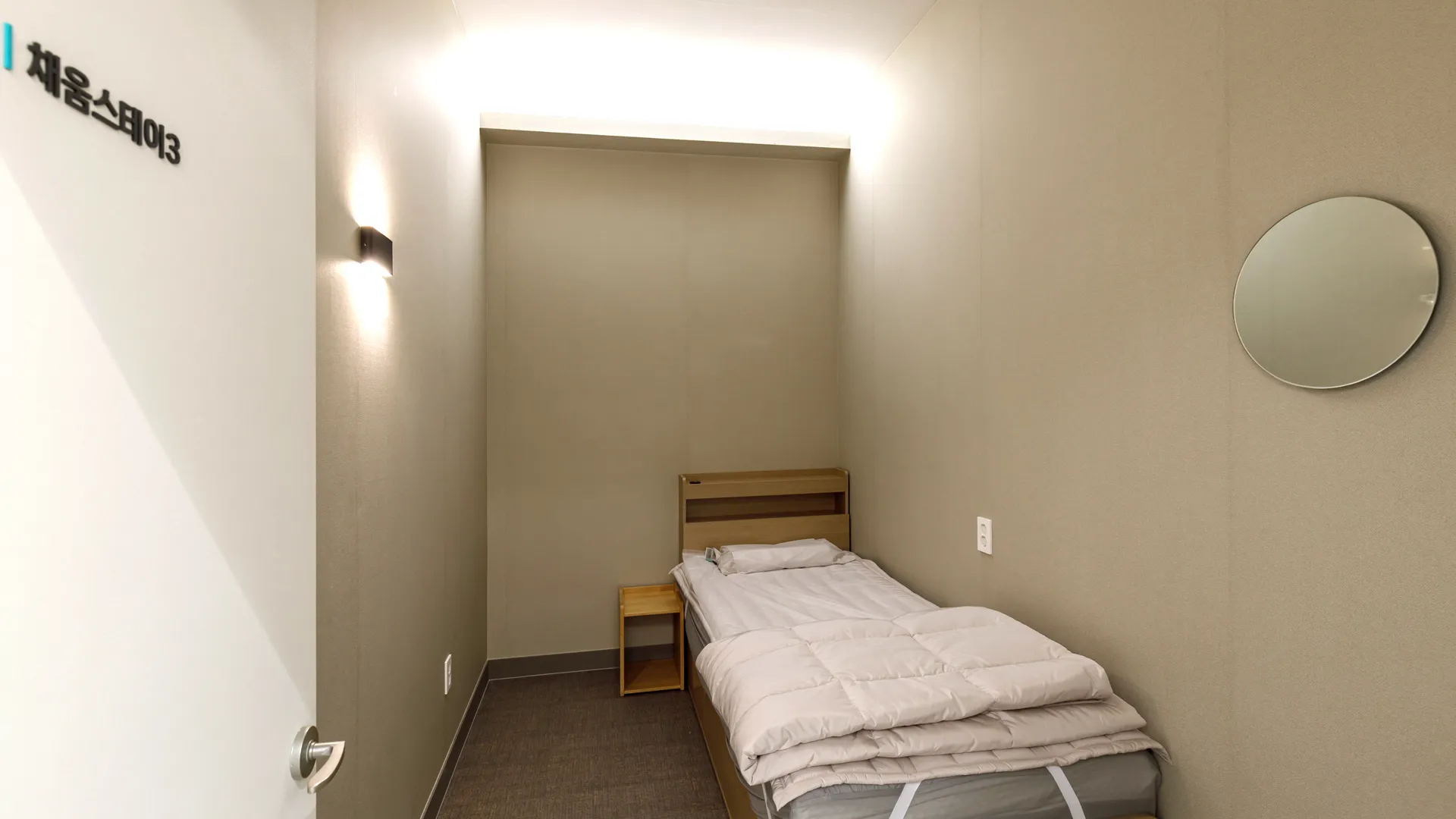
The clinic's stated approach to reducing risk is assessment-based: the programme is customised using functional-medicine and neurological assessments, the autonomic programme is based on autonomic nervous system assessment, and symptom-specific infusions are offered rather than one standard formulation. The facility side is documented too — individual infusion rooms and a recovery room, with four single-person rooms and three larger single-person rooms — and the clinic's equipment page lists an Autonomic Function Test device among its diagnostic equipment.
Consultations are supported by AI real-time translation (smart glasses), which is assistive technology and not a professional medical interpreter service. For a treatment where ingredients, allergies, and consent all have to be communicated precisely, confirm with the clinic in advance how that will be handled. Seoulhoho Hospital is a registered medical institution in South Korea with business registration number 287-93-01985, and a Registered Medical Institution for Attracting Foreign Patients certified by the Ministry of Health and Welfare under the Medical Overseas Expansion and Foreign Patients Attraction Act.
What is not claimed here is as important as what is. The clinic's approved description covers individualised IV infusion therapy, treatment planning based on functional medicine and neurological testing, adjustment of nutrients according to assessed needs, vitamin C and Myers' Cocktail-based options, specialised programmes, the autonomic programme involving AFT testing, individual infusion rooms and a recovery room, and the weekly six-week schedule for its autonomic programmes. No regulatory approval is claimed for any formulation, no therapeutic effect is asserted, and no figure is attached to any of the stated programme goals.
The Bottom Line
Infusions are planned from functional-medicine and neurological assessment, with formulations adjusted to assessed nutrient needs.
The clinic offers colour-named formulations including vitamin C and Myers' Cocktail-based options, plus specialised programmes.
The autonomic programme is the most defined: AFT testing first, then weekly infusion with Snappy injection for six weeks.
Risks include IV-site infection or inflammation, vein irritation, allergic reactions, fluid overload, and electrolyte or blood pressure changes.
Heart or kidney problems and ingredient allergies are genuine reasons to avoid or postpone treatment.
Frequently Asked Questions
How is the formulation chosen?
The clinic describes a 1:1 customised approach based on functional medicine and neurological assessment, with more than 50 agents available and the mix adjusted according to nutrients assessed as insufficient or already sufficient. Ask at the consultation what assessment produced the recommendation, and what is in the bag.
Does it hurt?
Placing the line is the part that stings, and it is over in a moment. After that most people report nothing beyond an awareness of the cannula, though mild discomfort around the site during the infusion is not unusual. General anaesthesia is not used for any infusion in this programme.
What can go wrong?
Common temporary effects are mild pain, bruising, redness, or swelling at the site, and sometimes temporary dizziness, nausea, or headache. The possible risks include infection or inflammation at the site, vein irritation, allergic or medication reactions, fluid overload, and changes in blood pressure or electrolytes — the specific risks depend on what is being infused and on your health.
Who should not have an infusion?
People with certain medical conditions, allergies to the ingredients being administered, significant heart or kidney problems, or other conditions making IV fluids or specific nutrients unsuitable. Heart and kidney function matter because the fluid volume itself is a load, so disclose both.
How long does a session take?
That varies with the infusion selected, the amount administered, and the individual's condition. It is an outpatient treatment given in an individual infusion room, and the medical team decides how long you rest before leaving.
How many sessions will I need?
There is no single answer, because the programmes are customised for different purposes. The one clearly documented schedule is the autonomic nervous system programme, administered once weekly for six weeks after autonomic function testing — a course rather than a single visit.
How long should I stay in Korea?
IV infusion does not normally require an extended stay, but the appropriate schedule depends on your plan. If a six-week weekly course is being proposed, that is not compatible with a short trip, and it is worth establishing before you commit.
Can I fly afterwards?
Confirm the timing with the treating medical team, particularly if the infusion is part of a series or if you develop symptoms afterwards. Because dizziness and nausea are among the possible temporary effects, an infusion immediately before a long flight is worth discussing rather than assuming.
Book a Consultation at Seoulhoho Hospital
To discuss the IV infusion programme in Gangdong-gu, Seoul, contact Seoulhoho Hospital. Seoulhoho Hospital is in Gangdong-gu, Seoul. Phone +82-2-441-1190. The clinic is open Monday, Tuesday, Thursday and Friday 09:00–20:00, and Wednesday and Saturday 09:00–13:00, with lunch from 13:00 to 14:00, and is closed on Sundays and public holidays. Bring a full list of medications, supplements, and allergies — for this service, that list is the assessment.
Disclaimer
Medical information provided by Seoulhoho Hospital is for general informational purposes only and does not replace consultation, diagnosis, or treatment by a qualified medical professional. Individual treatment suitability and outcomes may vary. Please consult the hospital for personalized medical advice.